Showing posts with label STEAM. Show all posts
Showing posts with label STEAM. Show all posts
Sunday, June 4, 2017
Cine-Bridge
In my class Social Entrepreneurship we learned everything that comes into learning about making business. We mainly went over hedgehog concept, marketing, incentives, mission/vision statements, financial projections, sales, pitch, legal structures, and we also read the book The E-Myth. As for FEs we had many guest speakers come in, we had the founder of Purple Asparagus, the director of 826Chi, and we had our very own founder of GCE Eric Davis come in. All of these people showed us what worked best for them and what they could have done better, everyone was saying how they needed to make their marketing better, which was a key takeaway. For the action project, we had to create a business idea of our own, we had the entire term to work on this, and each subject of our business was discussed whilst learning about it, such as what our mission/vision statement would be. We had to create a video doing our pitch, recreating the idea of we actually had to do a very quick pitch to someone about our business. I really liked this project, because I feel it really helps me with thinking about the future, and I really hope I can make this an actual business at some point. I struggled a lot with my time and being able to hit everything content wise, without going over time. Below is my pitch, hope you enjoy learning about my company Cine-Bridge!

Saturday, February 25, 2017
The Vision
In unit 3 of my class System and Models we learned about how to make a company or group work the best, and different methods that are used to have the best working group. This includes looking at measures like Total Quality or Six Sigma, then looking at Commons, which are resources that are shared but not regulated. We also looked at the different work environments and how they can change the amount of productivity in a company. For an FE we talked to the head of the school Eric Davis about the different functions of our school. For the action project, we had to take a system with in the school, could be anything, and talk about about it through SWOT. I will explain SWOT in the presentation below. While explaining it through SWOT we also had to show how it relates to different trends that businesses do, the Commons, and Maslow Hierarchy of Needs. We then have to figure out how to make this system better and explain why it would work. I chose to talk about the teachers and how they collaborate with each other. Something I thought was interesting about this project, was there have been times when they use what we say and implement in the school itself. Something I thought was difficult was coming up with a way to present all of this, because it didn't need to be a presentation, that is just how I ended doing it. I would have liked more time so I could have made it more interesting and creative.
Thursday, February 23, 2017
Winner Winner Chicken Dinner
In my advisory class, Math Camp, we had to pick a math subject that we were interesting in learning more about. Then work on it for the entire class practicing the subject and getting good at it. We only met once a week on Mondays, we would give ourselves homework, or just use our class time to work on it. My subject is Card Counting, which is very popular when playing Blackjack aka 21. The point of the game is to get 21 in your hand to win, in casinos you are playing against whoever is at your table, and mainly the dealer. Card Counting is used to win the game, or have a better chance at winning, usually used to make sure you know what to bet when playing at casinos. This is related to math because in order to count the cards you need to be able to add and subtract very fast, it is very important to be able to remember things and adapt very quickly that is happening in the game. It is something that uses a lot of very simple math, but in such a fast pace that it can help you win a lot of money when you come out a casino. Hope you enjoy learning Card Counting and hopefully get good at yourself!
Now first thing you need to know to be good at Blackjack in general is basic strategy:
 |
| Blackjack Institute. "Basic Strategy." 2002 |
This chart shows you what you should and shouldn’t do when playing. This is an easy way to keep yourself ahead of the game. Now for counting cards it is very simple. Whenever a card is played you make sure you know how that affects the count. So I will tell what card does what.
- 2 through 6 = +1
- 7 through 9 = 0
- 10 through Ace = -1
Now that you know that when the deck is being played you just add or subtract numbers now. Say a 6, 5, 4, 7, ace, and 10 are played, the count would then be +1. This is because the 6, 5, and 4 made the count +3, but because the Ace and 10 were played it was dropped to +1. The count is very helpful in that it can tell you what to bet, and if you should go high or low. The main thing you should always know is that 10 has the most cards in a deck; you have the 10, Jack, Queen, and King. That is 16 cards out of 52 cards. Meaning they are the most likely to be played. You have always have to remember what is being played so you can also change your moves, because if a lot of 10 cards have been played then the chances of you getting another 10 are very low.
Lastly there is a thing called True Count, this is basically when you are playing a game with more than one deck. The way this works is, say your count currently in a game is +3, and there are 2 decks being played the true count would be +1.5. You divide the count by the amount of decks that are being played. This isn’t the easiest thing to do though because all casinos use a different amount of decks, and they have shuffle machines that can change everything in an instant. There is even a machine that keeping the true count is impossible because you can’t focus on how many decks are being played when it is constantly shuffling the cards.
Thursday, February 9, 2017
Can I Help You With Something?
In unit 2 of my class System & Models, we learned about groups of people and how they come together, and how they go apart. As an FE we went to Mariano's and divided into groups to look at people and see what people go towards most in the store. As for the action project, we had to, with a partner or not, pick a subject we would want to do a lab report on. My partner and I choose to make an experiment to see how employees come up to us based on our gender, and see if there are any trends. Something I liked about our project was that we go to choose anything we wanted and got to use ourselves to our advantage when doing the experiment. Something that was difficult at first was choosing our subject, because my partner and I knew we had to do some extra stuff for our experiment since it was more than one person. Please enjoy looking at my lab report, and seeing how employees come up to people!
Monday, January 23, 2017
Number One Protagonist
In the course System and Models, we learned about different personality tests and how they can be used in certain situations to help people understand you more, but also to help you understand yourself more. Next to that, we went over imaginary numbers and they can dispel the theory of not being able to square root a negative number. For the action project, we took multiple personality tests such as the Myers Briggs, Enneagram, DISC, and the TKI. Each of these show what kind of person you are in different ways. We then had to make a self portrait of ourselves and write an artist statement how two of these tests relate to our self portrait. The self portrait could have been anything visual, so I decided to do an actual self portrait of myself but add some details to make it relate more the personality tests I wanted to use. What I like about this project was being able to freely create anything and show how it really does represent us, even if it looks nothing like us. Something I struggled with was coming up with a way to do my self portrait, and how I wanted to do it, mainly because it was so free. I hope you like my drawing and like hearing more about me!
“Looking at Power”
Pencil/Markers
H 10 ½ “ x W 8”
Taking the Myers Briggs personality test and the Enneagram test, I learned more about myself in that I do take on a leader type of image. For the Myer Briggs personality test, I belong to the ENFJ community of people. Some famous people that fall under this category of the different 16 possibilities are Martin Luther King Jr. and Nelson Mandela. To go into more detail the, ENFJ are known for being, “natural-born leaders, full of passion and charisma. Forming around two percent of the population, they are oftentimes our politicians, our coaches and our teachers, reaching out and inspiring others to achieve and to do good in the world. With a natural confidence that begets influence, ENFJs take a great deal of pride and joy in guiding others to work together to improve themselves and their community (ENFJ Personality “The Protagonist”, 2011).” I really agree with this because I really like helping others with a passion, it makes me feel good. They do say that this category does not back down from talking out, which I don’t agree with for myself because I do tend to stay quiet, but I am speaking out more, because of my school. In the image I show this by the angle I drew myself, where I am looking up, as a leader would. I am stepping up and becoming the leader I know I can be in this world. For the Enneagram test, I fall under the One category, which has traits of a Four and Seven. To go into more detail: “Ones are conscientious and ethical, with a strong sense of right and wrong. They are teachers, crusaders, and advocates for change: always striving to improve things, but afraid of making a mistake. Well-organized, orderly, and fastidious, they try to maintain high standards, but can slip into being critical and perfectionistic. They typically have problems with resentment and impatience. At their Best: wise, discerning, realistic, and noble. Can be morally heroic (“The Preformer Enneagram Type One” 2016).” I find that statement interesting because I have heard people say that about me, but I don’t really think of making mistakes; I actually like them, because I can learn and grow. Besides that, I really agree with most others things. They both strongly relate to each other, but the Myers Briggs is a bigger picture of how I am and the Enneagram goes into a little more detail of why I am like that. To symbolize that into the drawing, I used words and colored them to pop more - a way of going into more detail to explain my morals and personality type. Work, because I work hard, and push others to do the same. Create, because I like to create new things to make something better or solve a solution. Lead, because I am good at pulling people together and getting them to do what is necessary. Imagine, because I have a lot of big ideas of what I want to do in the world. Lastly, Future, because relating to Imagine, I have great plans for the Future, and I like to have a plan built for what will happen.
A couple of other tests that I took were the TKI, which shows how you are in conflicting situations, I got the Accommodator, which basically means, “the complete opposite of competing. When accommodating, the individual neglects his own concerns to satisfy the concerns of the other person; there is an element of self-sacrifice in this mode. Accommodating might take the form of selfless generosity or charity, obeying another person's order when you would prefer not to, or yielding to another's point of view (“An Overview of the Thomas-Kilmann Conflict Mode Instrument (TKI)” 2009).” I agree with this a lot because I do tend to do this, just so I don’t have to fight anymore. I do feel in some cases this works with being a leader, because you need to know to work with people, and that might mean breaking up a fight so you can focus on what is important. Another test was the DISC, this measures what kind of person you are in a group. The personality I got in mine was Steadiness meaning, “is known for being steady, stable, and predictable. They are even-tempered, friendly, sympathetic with others, and very generous with loved ones. The S is understanding and listens well. Preferring close, personal relationships, the S is very opened with loved ones, but can also be possessive at times and hold them close (“Personality Types of DISC: S Personality Style (Steady)” 2017).” I agree with this a lot really because I am like this in many ways, in a group this works well for someone that is willing to put in the work with some guidance. I find that this can have some leadership qualities because they can put the forward, depending on the person they can pull people together. These two tests I believe are more detail of my two others being the Myers Briggs and Enneagram, they are represented but in a different way.
To create this image, I used pencil to have a outline of what I wanted and slowly made it more crisp and not as messy. Then I went over it in Sharpie and for the details used a thin point Sharpie. Same with the letters, and I planned out the colors actually. My thought process of doing so was really what it is important and what color really connects with the word; also depending on which one connect with the tests the most. That is why LEAD is all in capital letters and in red, because I want the viewer to see that first with myself. And then the other words are the thing keeping it up, like support, going into what it takes to lead.
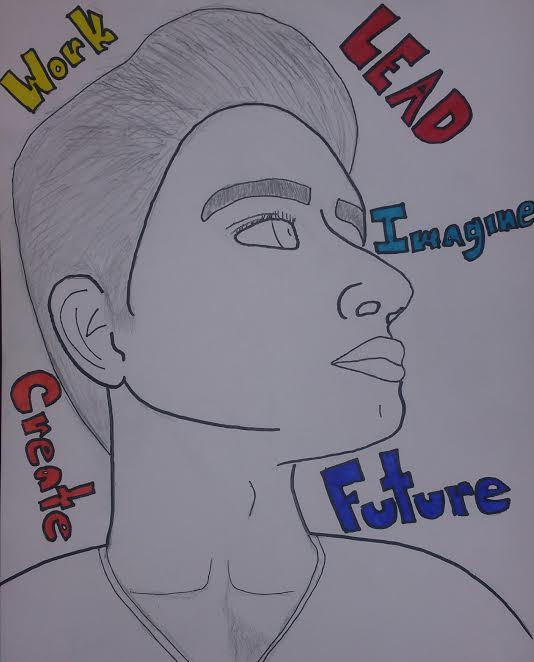 |
| NVA. “Looking at Power” 2017. Chicago |
“Looking at Power”
Pencil/Markers
H 10 ½ “ x W 8”
Taking the Myers Briggs personality test and the Enneagram test, I learned more about myself in that I do take on a leader type of image. For the Myer Briggs personality test, I belong to the ENFJ community of people. Some famous people that fall under this category of the different 16 possibilities are Martin Luther King Jr. and Nelson Mandela. To go into more detail the, ENFJ are known for being, “natural-born leaders, full of passion and charisma. Forming around two percent of the population, they are oftentimes our politicians, our coaches and our teachers, reaching out and inspiring others to achieve and to do good in the world. With a natural confidence that begets influence, ENFJs take a great deal of pride and joy in guiding others to work together to improve themselves and their community (ENFJ Personality “The Protagonist”, 2011).” I really agree with this because I really like helping others with a passion, it makes me feel good. They do say that this category does not back down from talking out, which I don’t agree with for myself because I do tend to stay quiet, but I am speaking out more, because of my school. In the image I show this by the angle I drew myself, where I am looking up, as a leader would. I am stepping up and becoming the leader I know I can be in this world. For the Enneagram test, I fall under the One category, which has traits of a Four and Seven. To go into more detail: “Ones are conscientious and ethical, with a strong sense of right and wrong. They are teachers, crusaders, and advocates for change: always striving to improve things, but afraid of making a mistake. Well-organized, orderly, and fastidious, they try to maintain high standards, but can slip into being critical and perfectionistic. They typically have problems with resentment and impatience. At their Best: wise, discerning, realistic, and noble. Can be morally heroic (“The Preformer Enneagram Type One” 2016).” I find that statement interesting because I have heard people say that about me, but I don’t really think of making mistakes; I actually like them, because I can learn and grow. Besides that, I really agree with most others things. They both strongly relate to each other, but the Myers Briggs is a bigger picture of how I am and the Enneagram goes into a little more detail of why I am like that. To symbolize that into the drawing, I used words and colored them to pop more - a way of going into more detail to explain my morals and personality type. Work, because I work hard, and push others to do the same. Create, because I like to create new things to make something better or solve a solution. Lead, because I am good at pulling people together and getting them to do what is necessary. Imagine, because I have a lot of big ideas of what I want to do in the world. Lastly, Future, because relating to Imagine, I have great plans for the Future, and I like to have a plan built for what will happen.
A couple of other tests that I took were the TKI, which shows how you are in conflicting situations, I got the Accommodator, which basically means, “the complete opposite of competing. When accommodating, the individual neglects his own concerns to satisfy the concerns of the other person; there is an element of self-sacrifice in this mode. Accommodating might take the form of selfless generosity or charity, obeying another person's order when you would prefer not to, or yielding to another's point of view (“An Overview of the Thomas-Kilmann Conflict Mode Instrument (TKI)” 2009).” I agree with this a lot because I do tend to do this, just so I don’t have to fight anymore. I do feel in some cases this works with being a leader, because you need to know to work with people, and that might mean breaking up a fight so you can focus on what is important. Another test was the DISC, this measures what kind of person you are in a group. The personality I got in mine was Steadiness meaning, “is known for being steady, stable, and predictable. They are even-tempered, friendly, sympathetic with others, and very generous with loved ones. The S is understanding and listens well. Preferring close, personal relationships, the S is very opened with loved ones, but can also be possessive at times and hold them close (“Personality Types of DISC: S Personality Style (Steady)” 2017).” I agree with this a lot really because I am like this in many ways, in a group this works well for someone that is willing to put in the work with some guidance. I find that this can have some leadership qualities because they can put the forward, depending on the person they can pull people together. These two tests I believe are more detail of my two others being the Myers Briggs and Enneagram, they are represented but in a different way.
To create this image, I used pencil to have a outline of what I wanted and slowly made it more crisp and not as messy. Then I went over it in Sharpie and for the details used a thin point Sharpie. Same with the letters, and I planned out the colors actually. My thought process of doing so was really what it is important and what color really connects with the word; also depending on which one connect with the tests the most. That is why LEAD is all in capital letters and in red, because I want the viewer to see that first with myself. And then the other words are the thing keeping it up, like support, going into what it takes to lead.
Sunday, December 11, 2016
Honey I Love This Trip!
In my new class, Game Changers, I am learning how everything works in depth about tabletop games such as how you define a game, the different genres of games there are, and all the mechanics behind games. Also we looked at randomizers like dice and how certain dice give you more abilities, such as a die with 12 sides (d12) versus having 2 dice that are 6 sided (2d6). For FEs, we went to Cat and Mouse, a game shop, where we learned how to play Settlers of Catan, and ask the expert, Peter, who worked there his experience with games and game making. We also talked to Jason Little, a game designer who has created over 50 games, and we asked him questions about what the industry was actually like. For the action project we had to think of a scenario where some people would like to play a game and our recommendations for that scenario. I chose a scenario that I lived through where a bunch of kids are going to another country and they need to do something while in the airport. The two games I suggested they should play are WA and Honey I love You. What was challenging was that this scenario was that I lived through it and when I was stuck in this airport with all these people while only knowing one person, it would’ve been fun to play these games. We did have games we played in airport, but the problem was that they were more of riddles than actual games. What I like about this project was how free it was in getting to choose the scenario and the games we see fit to play in those circumstances. I hope you enjoy reading my scenario and seeing why WA and Honey I Love You are the best choices for the kids in that airport!
Scenario:
A bunch of kids are stuck in the airport for a service trip and not everyone knows each other. What is a game that they can play to keep them entertained while they are waiting for the plane? You are trying to give the trip coordinators the best game so the kids aren’t bored whilst waiting. They have certain needs that are:
- They need a game where they can learn each other's names and more about each other.
- They do have room because it is late and the airport is mostly empty, so it could be a physical activity.
- They have no money to spend.
I have chosen two games that meet these needs, Honey I love You and WA. Below are the reference sheets to describe the games in more depth:
These kids could really gain a lot from both games. They are both icebreakers so the kids can get more comfortable around each other for the trip. They both involve great interaction to help them get comfortable as well. They are physical games so they aren’t just laying around bored in the airport. Plus they are both free and pretty fast to learn after some playthroughs. Each game does have one thing that another might be lacking in, but together they work very well. When I was on the trip we played both games, and both helped us get used to each very quickly and got our minds ready for the trip.
I recommend Honey I Love You more than WA just because you get to really connect with people, and everyone is happy and laughing at the creative ways people think of to make others laugh. An additional bonus is that some people in the airport know each other so they might use names and that will help people get used to new names. It really gives people something to talk about afterwards, as well.
Scenario:
A bunch of kids are stuck in the airport for a service trip and not everyone knows each other. What is a game that they can play to keep them entertained while they are waiting for the plane? You are trying to give the trip coordinators the best game so the kids aren’t bored whilst waiting. They have certain needs that are:
- They need a game where they can learn each other's names and more about each other.
- They do have room because it is late and the airport is mostly empty, so it could be a physical activity.
- They have no money to spend.
I have chosen two games that meet these needs, Honey I love You and WA. Below are the reference sheets to describe the games in more depth:
These kids could really gain a lot from both games. They are both icebreakers so the kids can get more comfortable around each other for the trip. They both involve great interaction to help them get comfortable as well. They are physical games so they aren’t just laying around bored in the airport. Plus they are both free and pretty fast to learn after some playthroughs. Each game does have one thing that another might be lacking in, but together they work very well. When I was on the trip we played both games, and both helped us get used to each very quickly and got our minds ready for the trip.
I recommend Honey I Love You more than WA just because you get to really connect with people, and everyone is happy and laughing at the creative ways people think of to make others laugh. An additional bonus is that some people in the airport know each other so they might use names and that will help people get used to new names. It really gives people something to talk about afterwards, as well.
Saturday, October 29, 2016
SMART Investing
In Unit 2 of my class Economics, we learned about investing, and different types of things to invest in, such as bonds, mutual funds, and stocks. Then for the math side of things we focused a lot on matrices and how to add them, multiply, scalar multiply, find the determinant, find the inverse; also to solve a system of equations using the methods I listed before. For an FE we went to Northwestern Mutual to meet the owner and see what it is like to deal with investing and financial planning as a job. We also talked to former director E.D. to see his philosophy on investing and talk about the best time to start investing and saving money, now. Leading me to the action project we had to make a financial portfolio, by thinking of three SMART goals, and one would be for 1 year, one for 5 years, and one for 25 years. We were then given $49,128.87 to invest into companies we would want to invest in that we could use to get money for those three goals. I decided to invest in Disney, Nike, and General Electric, I will explain why down below in the post. Something that was difficult about this was definitely thinking of the goals, just because it is very hard to think of where your life will be in 1, 5, and 25 years. What I did like about this is that I can apply to my actually life, maybe not with the same amount money given to me, but it helps me think about my future more. I think for this if I did have that money I would definitely invest the same way because I think my 25 year goal will will be set, and I care more about that time, than I do in 1 or 5 years. Down below is my portfolio, hope you enjoy reading about my plans for the future!
First I want to talk about my philosophy when it comes to investing, now I have never invested before, but after studying it for so long and talking to professionals I came to this conclusion. I want to make investments where I can make some kind of profit, and have it be something I believe in. What I mean by that is doing a good thing for a nice cause, and getting some kind of reward for that. When it comes to my risk tolerance, I took a test, and I have a 27 score, which basically means that I have a moderate one, where I am not too risky with my choices in investing.
As I said for my investments I have a 1 year, 5 year, and 25 year goal, and here they are:
1. 1-year goal: Summer trip to Greece and Bulgaria ($2700)
2. 5-year goal: Move into my own apartment ($25,000)
3. 25-year goal: Have my own house, with car and start college fund for kids ($320,000)
You might be wondering what kind of companies I value. Well, ones that are innovative and think outside the box. While also trying to appeal to citizens and not just themselves, almost as something that wants or has long term values/plans. Now for my own person values just as NVA. I value doing good in the world, by helping people out, doing my part in something, making sure everyone is okay. Being creative, and not just sticking to what certain people have to do, thinking away from them so I can think of something better. To always be happy, and smiling, and knowing that certain things happen for a reason and you need to learn to live with it and face your fears.
These are the share prices for the three companies I am investing in:
$93.05: Disney
$51.16: Nike
$28.92: General Electric
Two Companies I like the most are Disney and Nike, so I will tell you a little about their companies.
Nike:
- I assume that Nike and Disney, even though it looks like they are going down, will come back from the season for Basketball and other sport to start up again; for Disney they will have new movies coming out, giving them a higher rate.
- I assume that my 25 year goal will work out better than wanted because I put so much money towards it.
References:
“General Electric Return on Investment.” CSI Market. N.p.,n.d.Web. 27 Oct. 2016
“Investment Risk Tolerance Quiz.” Rutgers. N.p.,n.d. Web. 28 Oct. 2016.
"Nike Return On Investment." CSI Market. N.p., n.d. Web. 27 Oct. 2016.
"Nike Inc. (NKE) | Valuation Ratios." Stock Analysis on Net. N.p., n.d. Web. 27 Oct. 2016.
"Walt Disney Co. (DIS) | Valuation Ratios." Stock Analysis on Net. N.p., n.d. Web. 24 Oct. 2016.
“Walt Disney DIS”. MorningStar. N.p.,n.d. Web. 24 Oct. 2016.
First I want to talk about my philosophy when it comes to investing, now I have never invested before, but after studying it for so long and talking to professionals I came to this conclusion. I want to make investments where I can make some kind of profit, and have it be something I believe in. What I mean by that is doing a good thing for a nice cause, and getting some kind of reward for that. When it comes to my risk tolerance, I took a test, and I have a 27 score, which basically means that I have a moderate one, where I am not too risky with my choices in investing.
As I said for my investments I have a 1 year, 5 year, and 25 year goal, and here they are:
1. 1-year goal: Summer trip to Greece and Bulgaria ($2700)
2. 5-year goal: Move into my own apartment ($25,000)
3. 25-year goal: Have my own house, with car and start college fund for kids ($320,000)
You might be wondering what kind of companies I value. Well, ones that are innovative and think outside the box. While also trying to appeal to citizens and not just themselves, almost as something that wants or has long term values/plans. Now for my own person values just as NVA. I value doing good in the world, by helping people out, doing my part in something, making sure everyone is okay. Being creative, and not just sticking to what certain people have to do, thinking away from them so I can think of something better. To always be happy, and smiling, and knowing that certain things happen for a reason and you need to learn to live with it and face your fears.
These are the share prices for the three companies I am investing in:
$93.05: Disney
$51.16: Nike
$28.92: General Electric
Two Companies I like the most are Disney and Nike, so I will tell you a little about their companies.
Nike:
They value their customers and want to make sure every athlete is taken care of so they can perform at their best. P/E ratio of 23.32. Dividend yield of 0.85%. They have been around for a long time, and sponsor many famous athletes, also because they sell so many different products they are always making money. This company really focuses on my values, and they are a company that takes care of people, and they think outside of the box a little, in making sure someone can perform the best. Now below is what they stock looks like for Nike in one year. Now it may seem that is dropping, but it actually leveling it out, because Nike has a lot of bursts. Also during the that it was high was basketball season, so that when it starts again the stocks will go up.

Disney:
Disney:
They work to entertain people, and make sure kids, teens, and adults are all happy from their products. They are always expanding, and trying to see how they can make certain things better. They have a P/E ratio of 17.84. They have a dividend yield of 1.53%. Also because they are always expanding and have been around for so long they are well protected in the market. Again, this one looks like it is dropping, but they just haven’t come out with any big movies yet. At the left,down below, it is very high, and well they had just done the Star Wars movie, and there are a lot more to come, and even Marvel movies. So this is perfect because I will get to hit those high points, as the same for Nike.

Time horizons are huge, because they can really tell you how much money you might invest in one thing versus another. Knowing that here is how I invested in my 1,5, and 25 year time horizon:
- For year one of my invest to take a summer trip to Greece and Bulgaria, I want to invest in General Electric and Nike. I would invest a total of 1,281.28, meaning 50/50, so 640.64 towards each company. This would give me 12 shares for Nike and 22 for General Electric.
- For 5 years of my investment to have my own apartment. I want to invest in General Electric and Disney. I would invest a total of 1,951.56 and again 50/50, so 975.78 towards both companies. This would give me 10 shares for Disney and 33 for General Electric. \
- For 25 years of my invest to have my own house, car, and college fund started. I want to invest in Disney and Nike. I would invest a total of 45,896.08 and again 50/50, so 22,948.04 towards Disney and Nike. This would give me 448 shares for Nike and 246 shares for Disney.
You might be wondering how I thought that through, well I shall tell you. At first I knew I needed to have the most amount of money towards the 25 year goal. I also knew for the first goal that I didn’t need a lot of money back from my investments. So what I did was add the two share prices from each one and multiply it by 2, and keep doing that until I came along a number I thought was fair.
Let's look at Return on Investment (ROI) to make sure I get a good percentage of money back. Nike as an ROI of 23% and General Electric as an ROI of 3.19%. So to find out the ROI of year one I will do 0.50 (50%) times 0.23 (23%) and add that to 0.5 times 0.0319 which is 0.1309. Now we can say that my ROI for year one will be 13%. Disney has an ROI of 12.5%, so with that we can find the 5 year. 0.5 times 0.125 plus 0.5 times 0.0319 which is about 7.8%. But I am not done there I would turn that 7.8% into 1.078 because 0.078 is the decimal of 7.8% but we add that 1 for the next year. Next we do (1.078) to the fifth power which equals 145.6% for my ROI in 5 years. For my 25 year, we do the exact same thing we did in the 1 year and 5 year, just different numbers. So, 0.5 times 0.125 plus 0.5 times 0.23 which is 17.7%. Lastly we do (1.177) to the 25th power which is 5880% for my ROI in 25 years. Now I can use that to find out how much I will have in those time horizons.
Now I believe having a diverse lifestyle is important and it is important that you use that kind of thinking in investing. For example, my stock sector is very diverse from entertain (Disney), energy (General Electric) and consumer goods (Nike). Disney is an in entertainment field because of what they sell to people, or give out to society. General Electric is energy because of how it deals with all different types of energy, from renewable to fossil fuels, and seeing how we can make everything better in the world. Nike is retail because it sells clothing mainly and accessories for athletes. My strategy for this was use companies that focused on different products, but had the same values in the end. So they are diverse in way but not in another.
My Assumptions:
- For year one of my invest to take a summer trip to Greece and Bulgaria, I want to invest in General Electric and Nike. I would invest a total of 1,281.28, meaning 50/50, so 640.64 towards each company. This would give me 12 shares for Nike and 22 for General Electric.
- For 5 years of my investment to have my own apartment. I want to invest in General Electric and Disney. I would invest a total of 1,951.56 and again 50/50, so 975.78 towards both companies. This would give me 10 shares for Disney and 33 for General Electric. \
- For 25 years of my invest to have my own house, car, and college fund started. I want to invest in Disney and Nike. I would invest a total of 45,896.08 and again 50/50, so 22,948.04 towards Disney and Nike. This would give me 448 shares for Nike and 246 shares for Disney.
You might be wondering how I thought that through, well I shall tell you. At first I knew I needed to have the most amount of money towards the 25 year goal. I also knew for the first goal that I didn’t need a lot of money back from my investments. So what I did was add the two share prices from each one and multiply it by 2, and keep doing that until I came along a number I thought was fair.
Let's look at Return on Investment (ROI) to make sure I get a good percentage of money back. Nike as an ROI of 23% and General Electric as an ROI of 3.19%. So to find out the ROI of year one I will do 0.50 (50%) times 0.23 (23%) and add that to 0.5 times 0.0319 which is 0.1309. Now we can say that my ROI for year one will be 13%. Disney has an ROI of 12.5%, so with that we can find the 5 year. 0.5 times 0.125 plus 0.5 times 0.0319 which is about 7.8%. But I am not done there I would turn that 7.8% into 1.078 because 0.078 is the decimal of 7.8% but we add that 1 for the next year. Next we do (1.078) to the fifth power which equals 145.6% for my ROI in 5 years. For my 25 year, we do the exact same thing we did in the 1 year and 5 year, just different numbers. So, 0.5 times 0.125 plus 0.5 times 0.23 which is 17.7%. Lastly we do (1.177) to the 25th power which is 5880% for my ROI in 25 years. Now I can use that to find out how much I will have in those time horizons.
Now I believe having a diverse lifestyle is important and it is important that you use that kind of thinking in investing. For example, my stock sector is very diverse from entertain (Disney), energy (General Electric) and consumer goods (Nike). Disney is an in entertainment field because of what they sell to people, or give out to society. General Electric is energy because of how it deals with all different types of energy, from renewable to fossil fuels, and seeing how we can make everything better in the world. Nike is retail because it sells clothing mainly and accessories for athletes. My strategy for this was use companies that focused on different products, but had the same values in the end. So they are diverse in way but not in another.
My Assumptions:
- I have made the assumption that even though my 1 year or 5 year goal might not go as planned, I put enough money into my 25 year, because I believe that to be more important.
- I assume that Nike and Disney, even though it looks like they are going down, will come back from the season for Basketball and other sport to start up again; for Disney they will have new movies coming out, giving them a higher rate.
- I assume that my 25 year goal will work out better than wanted because I put so much money towards it.
References:
“General Electric Return on Investment.” CSI Market. N.p.,n.d.Web. 27 Oct. 2016
“Investment Risk Tolerance Quiz.” Rutgers. N.p.,n.d. Web. 28 Oct. 2016.
"Nike Return On Investment." CSI Market. N.p., n.d. Web. 27 Oct. 2016.
"Nike Inc. (NKE) | Valuation Ratios." Stock Analysis on Net. N.p., n.d. Web. 27 Oct. 2016.
"Walt Disney Co. (DIS) | Valuation Ratios." Stock Analysis on Net. N.p., n.d. Web. 24 Oct. 2016.
“Walt Disney DIS”. MorningStar. N.p.,n.d. Web. 24 Oct. 2016.
Tuesday, September 27, 2016
Directing My Life
In unit 1 of my STEAM class Economics, we learned about opportunity cost and how everything has a price: your time, your choices, and your passions. It was heavily filled with concepts of how people think and incentives. From a math point of view we went over calculating interest, such as compounding or continuously; another thing we touched on was matrices and how they work. One big thing we looked over was Supply and Demand and how a graph of that works. For FEs, we went to the Federal Reserve Bank to talk about how they work, and how they really control the economy. For our action project we had to pick a future job and think about two routes to get there, and make a presentation about all the costs that go into it. The career I chose was a film director, because it is something I have always wanted to do. The purpose of this was really to help us map out our future using what we learned. It wasn't just for a project, this helped us a lot in mapping out our lives. My main challenges were getting the correct information and how to put it all together. I am the most proud of getting to finish it on time, and using my time productively when doing this. Below is a Soundcloud of me explaining my two routes and below that my presentation, thank you!
Thursday, May 26, 2016
Becoming An Urban Planner
In unit 3 of Urban Planning, we focused a lot on the “flow” of a city, and how that can affect our society today and the people living in it. We watched three TED Talks on how today’s urban environment is not worth fighting for, is boring, needs to be retrofitted, and how it has led to segregation. For the action project we had to pick a block in a town/city and choose what flaws it has and how we can improve it. I chose a block right by my school. This is very industrial and bland looking, and I want to see how I can make it better. Something I liked about this was getting to choose a block anywhere in the city because it gives the class so much freedom. Something that was challenging was getting the volume for the buildings and doing the 3D model, only because it was very time consuming to get it perfect. Hope you enjoy!
The area I have chosen is around the intersection of Concord and Throop. This is a very industrial area, which houses the Fleet and Facility Management (2FM). They fix Chicago city vehicles and have architects for city building in this area. I would say that there aren’t any strengths in this area. The weaknesses are that it barely has any nature, and there are a lot of big blank walls and skinny roads, with skinny sidewalks. To make this area better I would put some art on these walls to make it more welcoming, even if it is a city space. I would add more green by putting green roofs on the ceilings so that during the summer workers don’t get too hot. Also, I would make the sidewalks bigger, and put plants around them.
The shape of the area I would like to fix up is a trapezoid, the bases are 553.73 ft and 906.14 ft, and the height is 1,045.38 ft, meaning that the area is 754,675.11 ft squared. Below is a picture of the space from google maps. I have labeled what I think is wrong with it.
But what should be done? Well on the roofs I would put solar panels and green roofs to get more energy and make sure the building doesn’t use extra. I would put art on the walls to make it look very welcoming, and widen the sidewalks, then add more greenery. Below is a scale drawing of my new design plans.
I was inspired a lot by James Kunstler, Ellen Dunham-Jones, and Majora Carter who all three gave TED talks on how they could/would change the urban planning we have now, and make it better. James inspired me by showing how blank walls can make an area look very bad and “not worth fighting for”. Ellen helped with showing how walkability in an area is so important for people, and it can affect how a space feels. Majora showed me cool roofs and green roofs which are good for energy saving and they look very nice as well.
My new designs will change a lot about the flow with this small area, but how? Well for transportation it makes walking nicer and gives the pedestrian more space to move. It will change the buildings by adding some nice art and adding green roofs and solar panels. Once the green roofs and solar panels are installed it will change the electricity/gas usage and save money, for when it is winter the heat/cool can stay in so they don’t waste electricity/gas. When the solar panels are up, since the building’s roof has a triangular point it will catch more sun, giving the building more energy. Lastly for infrastructure, the roads will be a bit slimmer but vehicles will still have room to move with both sides of traffic being able to move at the same time.
Now to get to the 3D aspect of it, the two main buildings of the area are the Fleet Department building, and the old fire house. So I got the volumes from people who worked there and they said that the Fleet Building was 24,296,300 ft cubed, all I need was the height. So I got the area from google maps which was 388,439.61 ft squared, then I just divided that to get my height which is 62.54 ft. For the old fire house they said the volume was 60,000 ft cubed, so using google maps I found that the area was 1,981.21 ft squared and when I divided those two numbers I got 30.28 ft as my height. Below is a 3D model of my design, made with Tinkercad.
A main problem I had was just doing the sketch and finding out the volumes. I overcame the sketch by trying my best, and asking for help from the teacher. I overcame the volumes, because I was able to find them out from the people working there, but I needed to show the area and height as well; so what I did was use those volumes, find the area on Google Maps, and then divide the numbers to get the height. What I learned from both is that you can always find a way through something, you just need to work hard and not give up. I wouldn’t want to do anything differently, I am very happy with the designs I have created.
The area I have chosen is around the intersection of Concord and Throop. This is a very industrial area, which houses the Fleet and Facility Management (2FM). They fix Chicago city vehicles and have architects for city building in this area. I would say that there aren’t any strengths in this area. The weaknesses are that it barely has any nature, and there are a lot of big blank walls and skinny roads, with skinny sidewalks. To make this area better I would put some art on these walls to make it more welcoming, even if it is a city space. I would add more green by putting green roofs on the ceilings so that during the summer workers don’t get too hot. Also, I would make the sidewalks bigger, and put plants around them.
The shape of the area I would like to fix up is a trapezoid, the bases are 553.73 ft and 906.14 ft, and the height is 1,045.38 ft, meaning that the area is 754,675.11 ft squared. Below is a picture of the space from google maps. I have labeled what I think is wrong with it.
 |
| NVA. "Google Maps Design" (2016) |
 |
| NVA. "2D New Design" (2016). |
My new designs will change a lot about the flow with this small area, but how? Well for transportation it makes walking nicer and gives the pedestrian more space to move. It will change the buildings by adding some nice art and adding green roofs and solar panels. Once the green roofs and solar panels are installed it will change the electricity/gas usage and save money, for when it is winter the heat/cool can stay in so they don’t waste electricity/gas. When the solar panels are up, since the building’s roof has a triangular point it will catch more sun, giving the building more energy. Lastly for infrastructure, the roads will be a bit slimmer but vehicles will still have room to move with both sides of traffic being able to move at the same time.
Now to get to the 3D aspect of it, the two main buildings of the area are the Fleet Department building, and the old fire house. So I got the volumes from people who worked there and they said that the Fleet Building was 24,296,300 ft cubed, all I need was the height. So I got the area from google maps which was 388,439.61 ft squared, then I just divided that to get my height which is 62.54 ft. For the old fire house they said the volume was 60,000 ft cubed, so using google maps I found that the area was 1,981.21 ft squared and when I divided those two numbers I got 30.28 ft as my height. Below is a 3D model of my design, made with Tinkercad.
Sunday, May 8, 2016
Saving Your Bills
In unit 2 of Urban Planning we learned a lot about electricity, such as what it is, AC (Alternating Currents) vs. DC (Direct Currents), and how it can used. We also focused on the War of Currents, which was a battle between Tesla (creator of AC) and Edison (creator of DC) to see which type of electricity is better. For an FE we went to the Museum of Science and Industry, where we looked at the Tesla coil and we went to the Brick by Brick exhibit. Also the area around the museum is where the World’s Fair in Chicago during 1893 was held, which is part of the book we are reading, Devil In The White City. For the action project we were paired with a partner and had to create a parallel circuit with 2 switches, one that controls everything and another that only controls part of it, and 5 resistors, such as a motor and light bulbs. Something I enjoyed was working with my partner and seeing what we could create together, and being able to just test so many things. Hope you enjoy the circuit my partner, MS, and I made.
Wednesday, April 20, 2016
What Can YOU Do With Popsicle Sticks & Glue?
In unit 1 of Urban Planning, we went over bridges, and looked at different types, such as truss, draw, suspension and arch. With that we looked into more trig, such as vectors, law of sines, law of cosines, etc. We also looked at physics, mainly Newton’s three laws of motion, and how to calculate velocity, both initial and final, and the different types of forces applied to something moving or standing still. For the action project we have to build a bridge with a partner, which has to be at least a foot long and hold 10 pounds. We can only use two materials, popsicle sticks (50) and glue, meaning we will have to use what we learned in this unit to our fullest. I am most proud of the fact that I almost used too many sticks on the base, but my partner and I were able to work around the issue and ended up using less than all 50 sticks. One challenge was the stability of the sides, so I put sticks from the base to meet the top in a diagonal way to support the sides more. Please enjoy!
Sunday, March 20, 2016
The Color Clock
For unit 3 of Light, Sound, and Time we learned a lot about different time telling devices. Some were made in ancient times like the sun dial, water clock, and later came the pendulum clock. We also looked at GMT, which is Greenwich, England time, and basically this was the first place to make time zones. For the action project we had to create a time telling device off of a device that has been made, but making it our own, with our own twist. The one I designed was The Color Clock, mainly made for young people, so that that they can have a fun way telling time. This is better than it's competitors because it keeps a simple design, making it user friendly to almost anyone who buys it. Something I liked was that we got to make our time telling device, because it was a bit of a challenge, since a lot of ideas have been done. Please enjoy seeing my new way to tell time!
References:
Vispute, Satyajeet. "Candle Clock: History, Facts, and Limitations." Buzzle. Buzzle.com, 2015. Web. 17 Mar. 2016.
Tuesday, March 1, 2016
Diddley Bow
In unit 2 of Light, Sound, and Time we focused on sound, how fast it can travel, and what it can travel fastest through. We also looked at waves, and how frequency plays a big role in understanding a wave, and with that we looked at the Doppler effect. Then we looked at instruments and how they produce sound, and how they can change frequencies, and this is how we learned about harmonics. Leading me to this action project, we are building a diddley bow, a type of guitar that only has one string on a piece of wood that uses a tin can. The materials used are a piece of wood (to use as a base), a tin can (to amplify the sound), a battery (to use a nut) and nails to hold everything down. I am most proud of having all materials in a short amount of time, and being able to build my guitar in the best way I could.
 |
| NVA "Diddley Bow" (2016) GCE Lab School |
 |
| NVA "Diddley Bow Drawing" (2016) GCE Lab School |
My diddley bow creates sound when the string vibrates, moving molecules in the air. The tin can helps with amplifying the sound to make it more audible. You could also use a slide on your string to check out different frequencies it can make. The diddley bow demonstrates a lot of key science concepts we went over like sound waves, because this is something that can actually produce sound waves. For frequency, it is shown by the tightness of the string we used, and the material we chose to use. From frequency we can then look at the wavelength and amplitude of the waves, and what they will look like. If it has a high pitch then the wavelength is shorter but the amplitude is the same. If it has a lower amplitude, then the volume is quieter.
The Doppler effect is where sound’s frequency can change according to a certain observer, when the source of the sound is moving. If I were running while playing my guitar and one man was standing behind, meaning I am running away from him, he would be hearing a lower pitch, because the sound waves get stretched out. If I were running towards him playing it, it would have a higher pitch because I am keeping up with the sound waves, so the frequency is higher.
For the string, the length is 15 inches and the thickness is 0.045 inches. To find the volume I need to do pi times radius squared times the height. The height is 4.25 inches and the radius is 1.6875, and using the formula, the volume of the guitar’s body (the can) is 38.02 inches cubed.

The picture above shows the harmonics involved with my guitar. Hertz (Hz) is the frequency unit, and centimeters are talking about the wavelength for each harmonic. To find each new harmonic you multiply the original frequency by whichever harmonic you are trying to find. So for the third I multiplied 117.92 by 3. For wavelength you do the opposite, you divide, so I would do 296.03 divided by 3.
I would not do anything differently, because I feel like I built my guitar in a special way, and that it turned out very well. One minor thing would be dulling the screws, because they do poke out of the bottom, which could be dangerous. Something I would do is sand them down, or just put a piece of wood under it to connect, so that they are completely covered. Below is audio of me playing my diddley bow.
The Doppler effect is where sound’s frequency can change according to a certain observer, when the source of the sound is moving. If I were running while playing my guitar and one man was standing behind, meaning I am running away from him, he would be hearing a lower pitch, because the sound waves get stretched out. If I were running towards him playing it, it would have a higher pitch because I am keeping up with the sound waves, so the frequency is higher.
For the string, the length is 15 inches and the thickness is 0.045 inches. To find the volume I need to do pi times radius squared times the height. The height is 4.25 inches and the radius is 1.6875, and using the formula, the volume of the guitar’s body (the can) is 38.02 inches cubed.

NVA "Diddley Bow Harmonics" (2016) GCE Lab School
The picture above shows the harmonics involved with my guitar. Hertz (Hz) is the frequency unit, and centimeters are talking about the wavelength for each harmonic. To find each new harmonic you multiply the original frequency by whichever harmonic you are trying to find. So for the third I multiplied 117.92 by 3. For wavelength you do the opposite, you divide, so I would do 296.03 divided by 3.
I would not do anything differently, because I feel like I built my guitar in a special way, and that it turned out very well. One minor thing would be dulling the screws, because they do poke out of the bottom, which could be dangerous. Something I would do is sand them down, or just put a piece of wood under it to connect, so that they are completely covered. Below is audio of me playing my diddley bow.
Tuesday, February 9, 2016
Lights, Camera, Action!
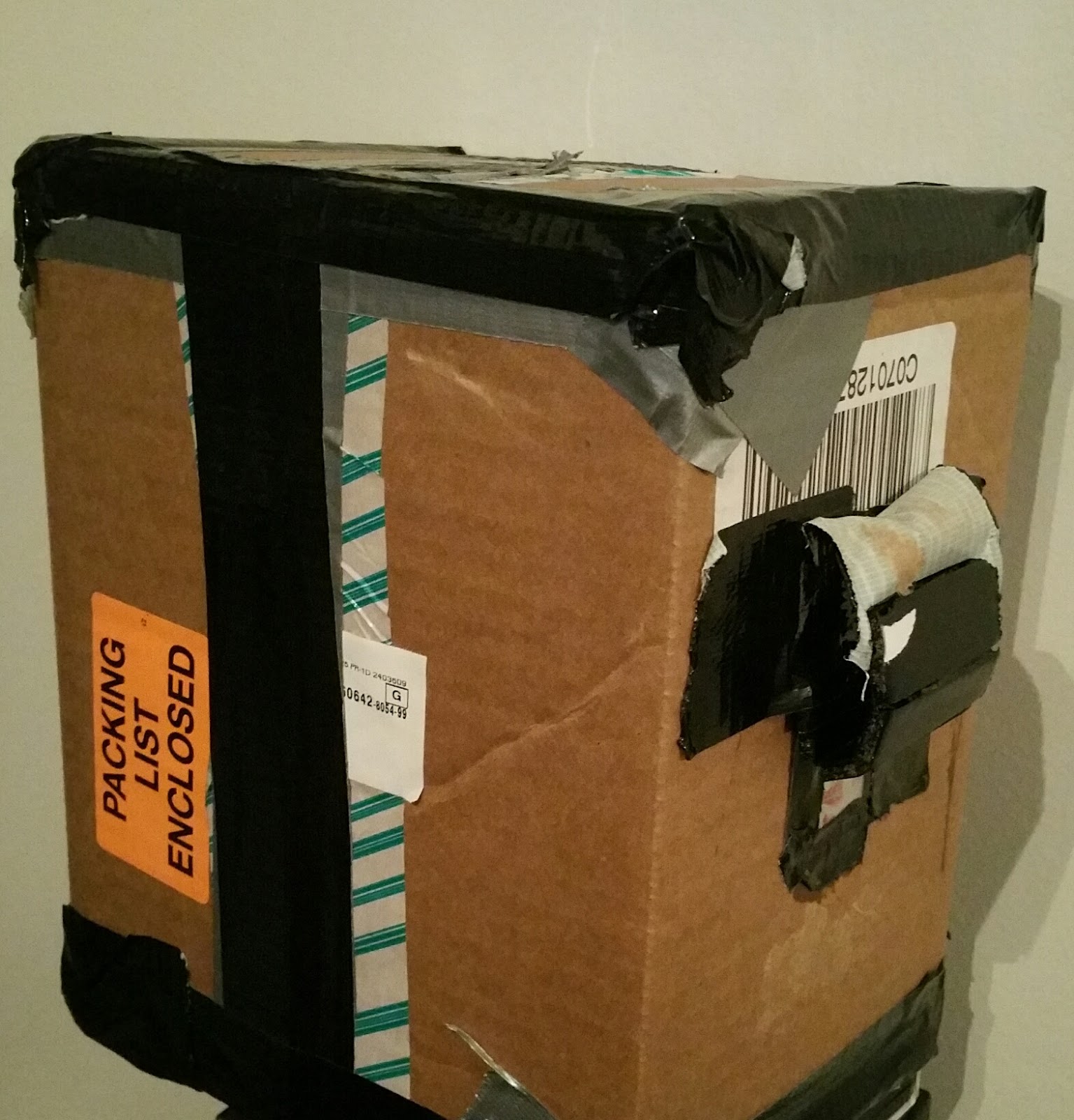
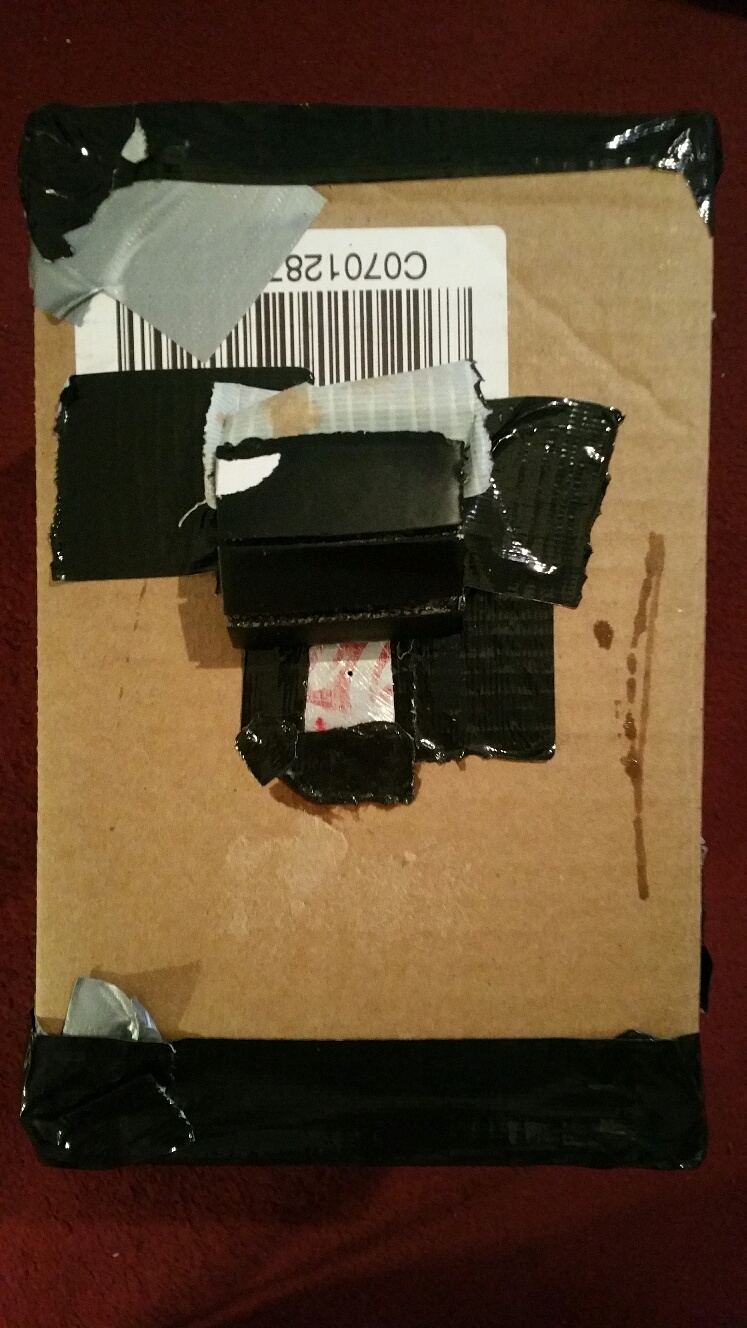
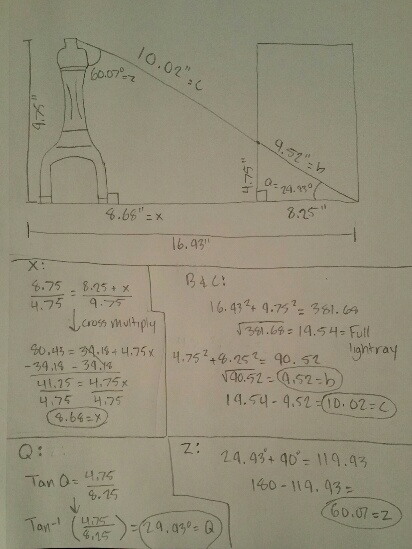
In unit 1 of Light, Sound, and Time, we explored more trigonometry and got in deep with it. We also talked about light, whether it is a particle or wave. Next we looked at colors, and how we are able to see colors, and what they are on the electromagnetic spectrum. We also looked at the human eye, and how it is similar to a camera. Leading me to the action project, we have to make a pinhole camera out of household materials, and create an image with it. With that we have to use the math we have learned and make similar triangles, from the box to what the image will be. The object used in the calculations is different from my actual image, because we needed something that was taller than the height of the pinhole camera. I really liked how we used household items to make a thing that can actually take a picture with film; it honestly amazes me that that is possible. Please enjoy seeing my camera, and the picture I was able to take with it.
 |
| NVA "Pinhole Camera Side View" (2016) GCE Lab School. |
 |
| NVA "Pinhole Camera Top View" (2016) GCE Lab School. |
 |
| NVA "Light in Pinhole Camera Example" (2016) GCE Lab School. |
 |
| NVA "Pinhole Camera Similar Triangles" (2016) GCE Lab School. |
 |
| NVA "Yoshi Pinhole Picture" (2016) Latin School. |
For the picture, the shutter speed was about 3 minutes, so the film had enough time to absorb all of the light, leading to a better picture. If I were to do this again, I would play around with the times of the shutter speed, so I could get the perfect image. Also I would like to be able to re-position the camera, so that it could get everything in the picture a lot better. I had more objects, a yoyo and a Rubic cube, under the Yoshi that I wanted in the picture. I would probably want to put something underneath to raise the Yoshi and the things it was on.
Thursday, October 22, 2015
Under My Wing!
For unit 2 of Design and Engineering, we learned about Newton’s First Law of Motion, Inertia, looked at more Trigonometry and did Calculus. For the action project we, with a partner, received a persona and what they needed out of a bike. We then had to create an actual 3D model of a bike that would fit what they needed for their biking experience. I had a person named Andres and because of the problems his grandmother wanted him to avoid, my partner and I made a bike below that fits his needs. What I liked about this project was making the bike and getting to know how far I could go with making it. What I didn’t like was that there were times when my partner and I didn’t see eye to eye, but we were able to overcome those problems. Please enjoy our design.
Before making these bikes, we did some research on bikes and how they worked. One thing I learned was that gears are actually more important than a lot of people may think. They actually really help the bike do certain tasks. Something else I learned was that different materials for the frame can change how the bike will perform. A lot of road bikes have a carbon fiber frame, and hybrid/ mountain bikes will have a stainless steel frame. The carbon fiber is very light, making it easier for the rider on a street to go fast, whereas a hybrid/mountain bike rider will need the steel frame for a more durable ride. For an interview I completed, a biker said, “I would actually like my frame, because it fits my riding, where I will be all over the place.”
The person I have, as I said before, is Andres. His grandmother wants to get him a bike that will be safe and comfortable for him to ride, and it also has to be good against harsh weather. His route includes having to go through the park and cutting into alleys and rocky roads to get to school and back. The normal part of the bike is that it is a mountain bike, with wheels made for all grounds and stainless steel to protect from rust. But what makes it different from other bikes? It’s very different from many other bikes, because it has gloves that make it easier to grip the bars. It has an umbrella that you can take on and off when it’s raining or snowing. It has a molded seat to fit your body comfortably. The gloves and seat make it more comfortable for the user, mainly so the body isn’t so stressed. The umbrella is for the harsh weather to come, and the wheels are thick to make riding on all grounds easier; it also has shock absorbers like a mountain bike, for Chicago potholes. The we decided it will be called The Wing, because it is like the expression, “you are under my wing.” because for the fact that every parents want to take care of their kid, so you now have a bike that does the same.
 |
| NVA. "Wing Sketch/" (2015). GCE Labs School |
Now to talk about the bike mathematically, we have a wheel that is theoretically 28 inches tall to get over land easier, making the circumference about 88 inches. His commute takes him 26 min, when riding about 7 mph or 3.13 meters per second, because the route that Andres takes is 3.2 miles, using Lincoln Park, and alleys. On that journey his wheels rotate about 2304 times. Now the wheel used in the model is 1 inches compared to the theoretically 28 inches. Now to make it a faster ride my partner and I chose to have the biggest cog in front and the smallest in back to have Andres go faster. The bike will have multiple gears, but we'll range the gear ratio, since the biggest front gear has 53 teeth and the smallest back gear has 13 teeth which makes it a 1:4 gear ratio. Then the smallest front gear is 35 teeth, and the largest back one has 26, which gives you a 26:35 ratio.
Now when talking about bikes, physics play a huge role such as energy and the different types, like Potential and Kinetic. For this bike and the rider, potential energy will be shown when Andres is on top a small hill because there is more gravity pulling down. He will have the most kinetic when riding in the alleys, because he is going straight and releasing his energy.
We did have to think of certain things though, like how the umbrella would be aerodynamic and how it could fit the rider. We just made it more pointy at the front, so the wind goes over it instead of through. Another concern was how the gloves would work, and we thought of making them more like mittens so people could have more hand space and warmth. We also wanted to make it where Andres could ride without them, and he could just hold onto the mittens for a comfortable grip when riding.
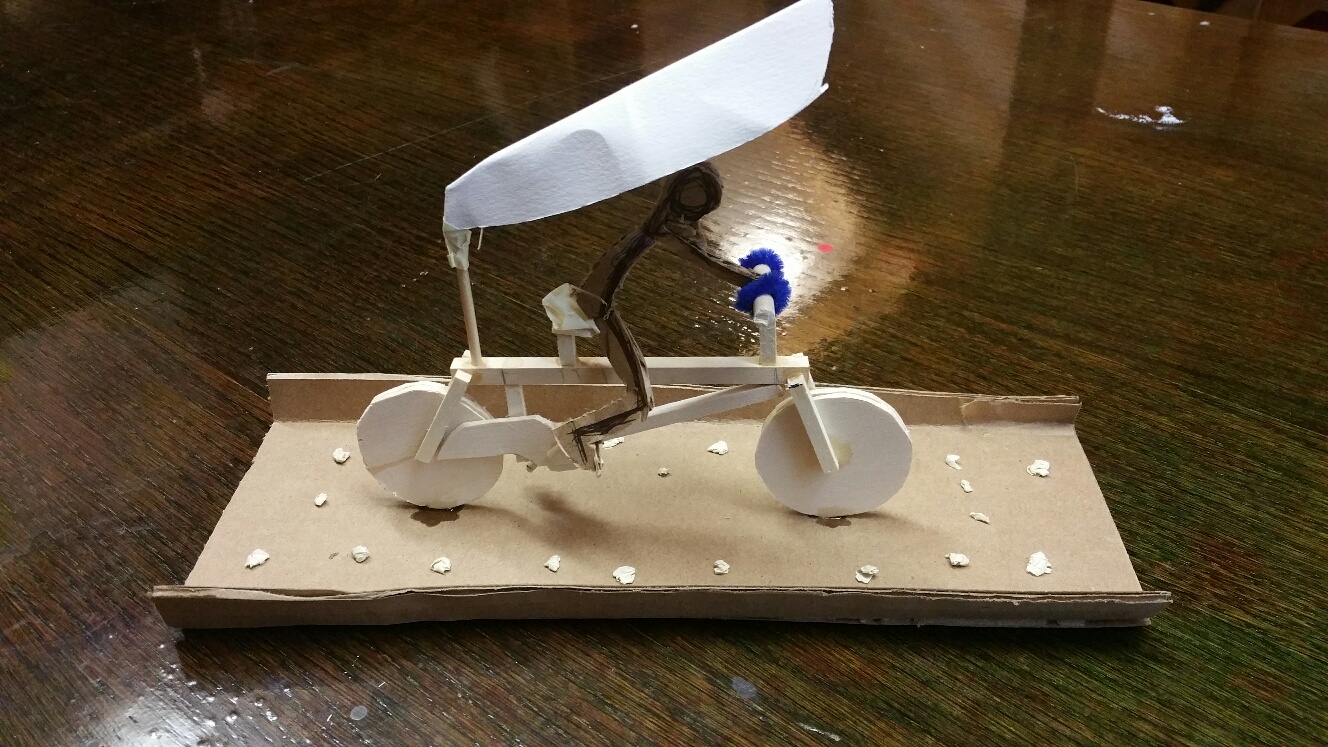 |
| NVA. "Wing 3D Without person." (2015) GCE Labs school |
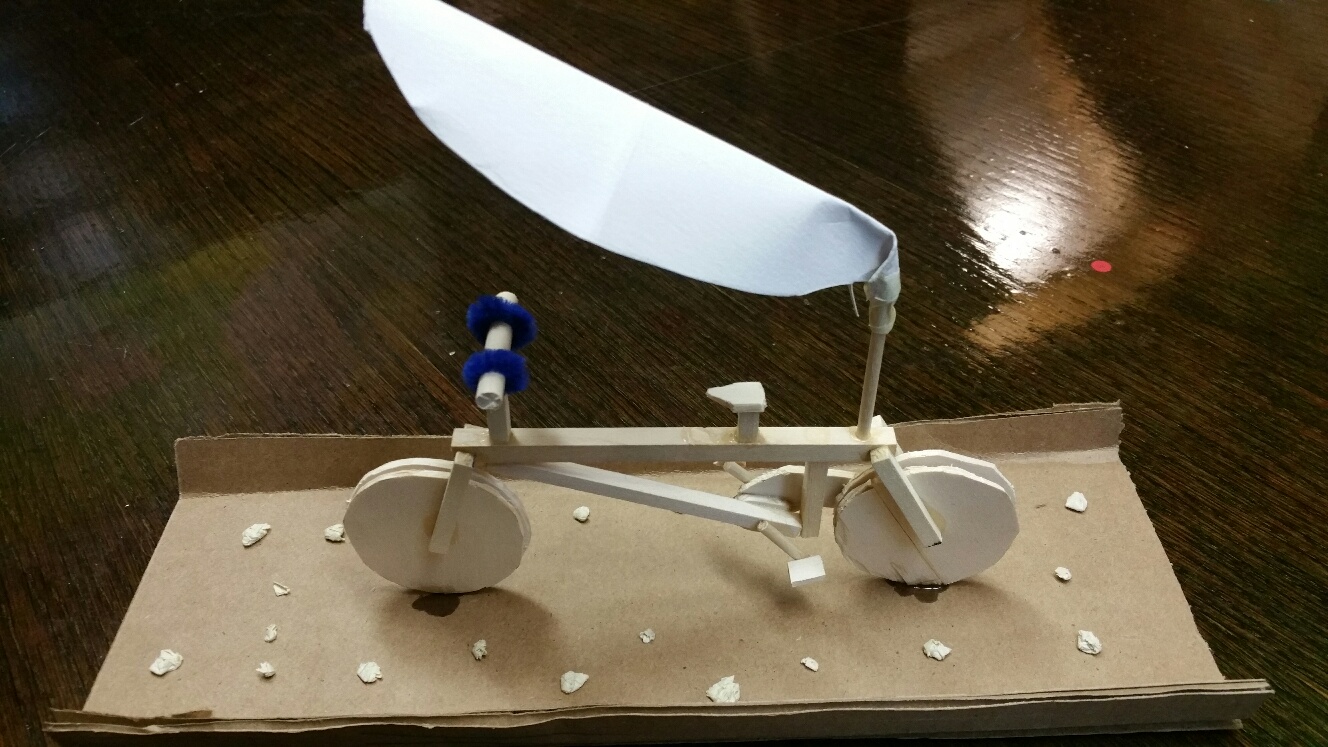 |
| NVA. "Wing with 3D With Peron." (2015) GCE Labs School |
Thursday, September 24, 2015
The New Cutting Edge C.O.O.L Lopper
For my new class Design and Engineering, we learned about simple machines, such as inclined planes, pulleys, wedges, and levers. We also learned about some physics that would apply to these machines as well as Geometry and Trigonometry. An FE we went on is we went to Home Depot and looked at gardening tools and how they are used and the kind of simple machine concepts behind them. Also we went to a place called Gravitytank, where we saw how people study and do research on how to design a new product to sell. Both of these help lead me to the action project, where we had to interview a gardener about the tools they use. Then when we went to Home Depot, we, with a partner, chose a tool and did research on it. Lastly we had to create a design to make this tool easier for elderly people to use or younger people, really anyone who isn’t the average adult size. My partner and I chose to do the lopper, a tool used to cut branches off trees or bushes. I’m proud of the design we came up with, however one challenge we encountered was really trying to make a good design that made sense, and could actually help a person, in every possible scenario. Please enjoy what we came up with!
What is empathy? This is when someone can put themselves in someone else’s shoes and really feel what it is like to be them. As I said before we had to interview a gardener, and what I learned from the person I interviewed was that they like to use the tools as a starter and then just use their hands. They said, “I find tools today are too expensive and just get in the way of the task they are made to do.”
When looking at the lopper we learned that it has long handles to make the use of leverage higher. It uses a bumper so when cutting you don’t smash your fingers, and it has a cutting capacity of 1.5 inches. From this we have created The C.O.O.L Lopper: the C stands for contractible, the O’s are the wheels that are on our tool, and L is for leverage. It is a lopper that is connected to a step button to cut, and it has handles for mobility and wheels on the bottom (Three: one in front and two in back). This way it is easier to move and swizzle. The handles have gel added to it, also the tool has a bar with holes and a metal bar that will click into it so it stays at that height (like a crutch); this will help to cut at different heights. Also the tool has the regular handles like from the original model so that you can direct where you want the cutter to cut. But why is this so great? Well it is easier to store away, because it can contract and become smaller, it is easier for elderly people to use because it is less stress on their back, and it is easier to control when in use.
 |
| NVA/JR "COOL Lopper" (2015) |
The physics that goes into this, is force and work, because the user will need to use a certain amount of force to get the lopper to cut. Now we have put some simple machine concepts into this design as well. We put a pulley system in it, because we wanted the tool to always be closed out of safety reasons. To open it to cut it, we have two pulleys that connect to the handles of the tool and they are connected to the stepper, so that when you push down the lopper opens, and when you let go the lopper closes. The ropes being used will allow the pulleys to create a sling shot effect, making it cut the branch you need to cut. Also a wedge is added, that being the blade to cut the branch in general, otherwise it is useless.
 |
| NVA/JR "COOL Lopper, Physics" (2015) |
We obviously had to think of some scenarios so it wouldn’t be too big, instead being comfortable. Now as I said we are thinking of an elderly person or someone who isn’t the average adult size, so to design our new tool I had to put myself in their shoes by, thinking of strength, when this would be used, and how it would just be better in the end. We also had to take into consideration the other styles of loppers and how they helps people, that being bent handles, or a gear to make the blade longer. These are the competition and so we had to take those concepts and make them better for our tool and the user. The main challenge of doing that was coming up with enough scenarios, where these concepts would need to be applied.
 |
| NVA/JR. "COOL Lopper" (2015) |
Friday, May 29, 2015
Giving Yourself Medical Attention
In unit 3 of my Cure class, we learned about how prevent problems from happening, and making ourselves our own doctors. We for some FEs, looked at diets, yoga, and making medication out of herbs. Leading me to the action project, we had to create a video where a person went to do the doctor to look for a way to prevent something from happening to them. For me I chose a man wanting to prevent any lung problems from happening, as you might see the doctor is very caring and understanding, which is in honor of Patch Adams and how he was so loving to the people he treated. The purpose of this was to show people that they can be there own doctors, and that we control a lot in our lives. Please enjoy!
Sunday, May 10, 2015
The Common Cold
In unit 2 of my cure class, we learned about the quadratic formula, and we looked about different medicines and their purposes. For a FE we went to CVS and Whole Foods to look at the packaging of medicine, and the different things they say, including side effects, the intended effect etc. Leading me to the action project, we had to create a medicine box, that had a main ailment and the symptoms. Then we had to add four different treatments for this ailment, behind and over the counter, and two others that someone would/could do at home. The ailment I have chose was the common cold, because it is something I get from time to time, and it usually lasts longer than any other ailment for me. We also for the action project had to make a video solving the quadratic formula given to us by the dimensions of our boxes. The purpose of this action project was to show people all the different medications there are for people to use, that are in chemical form and outside treatments.
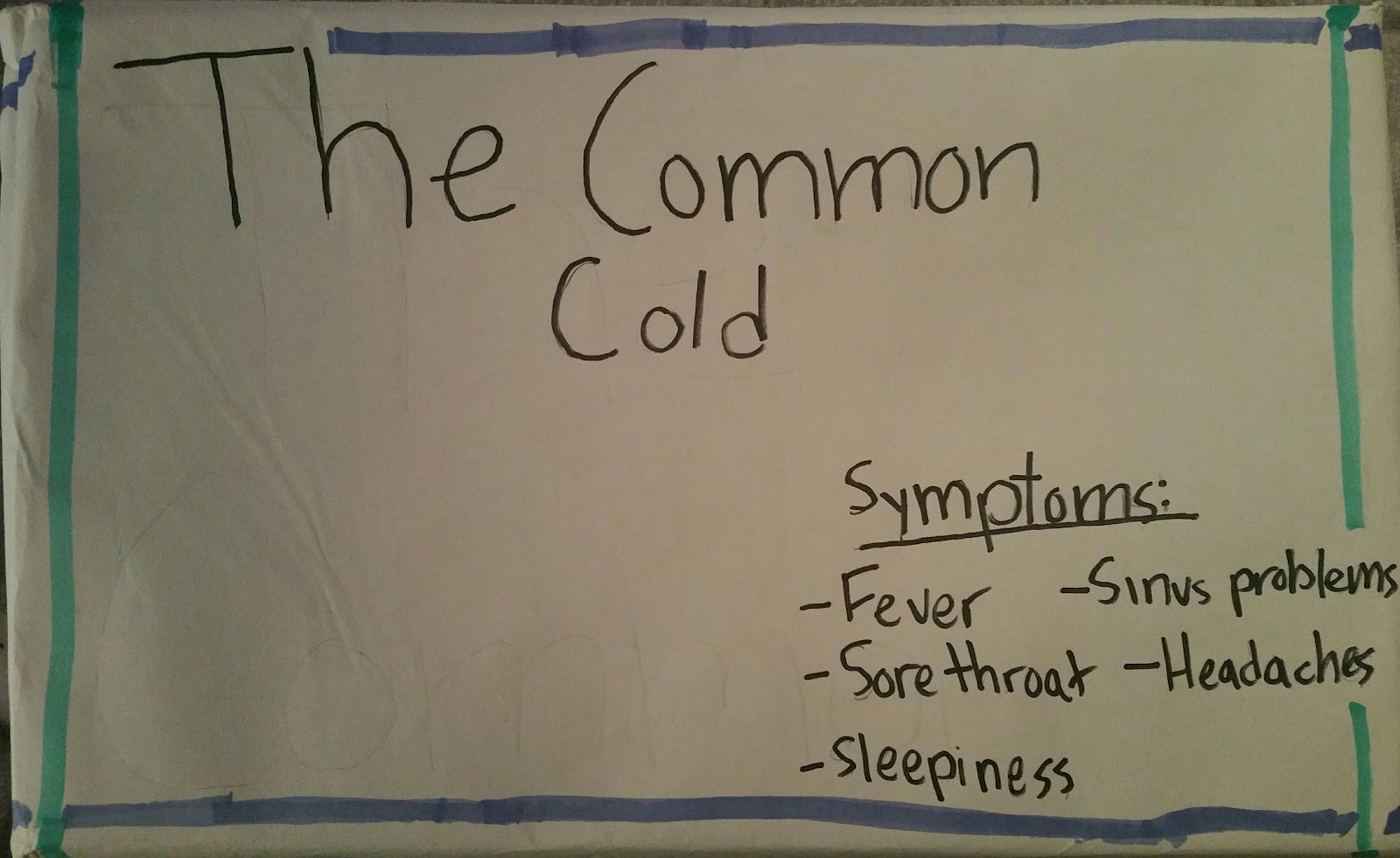
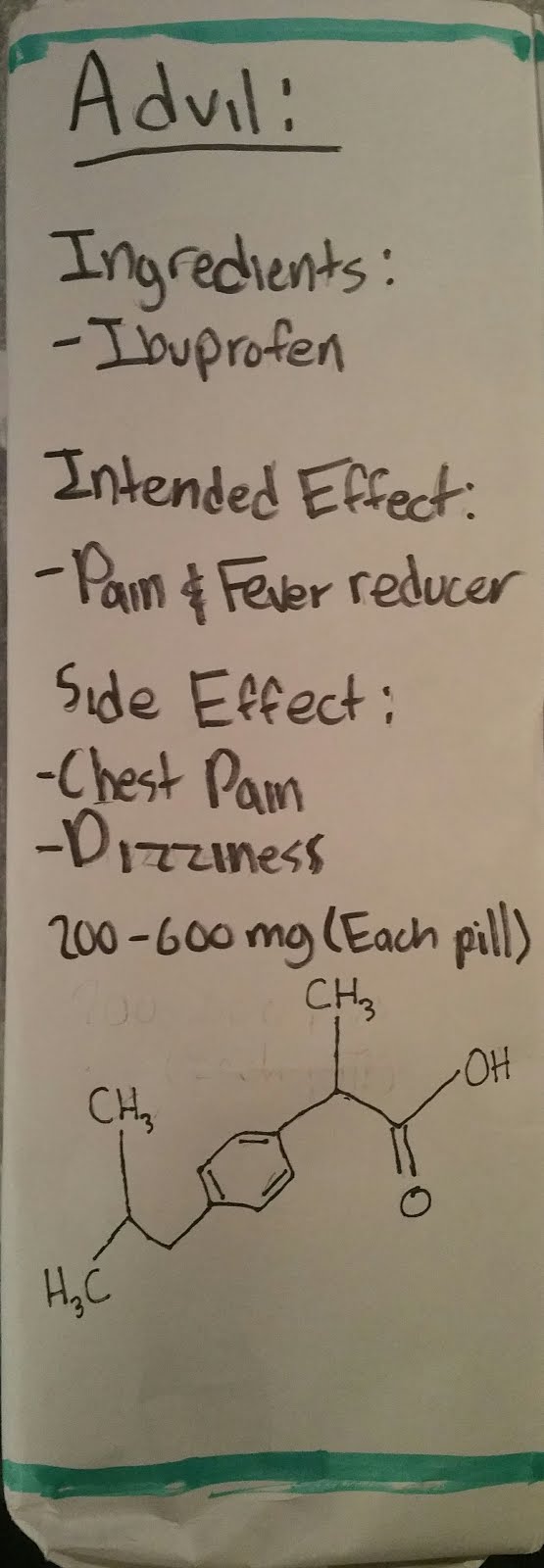
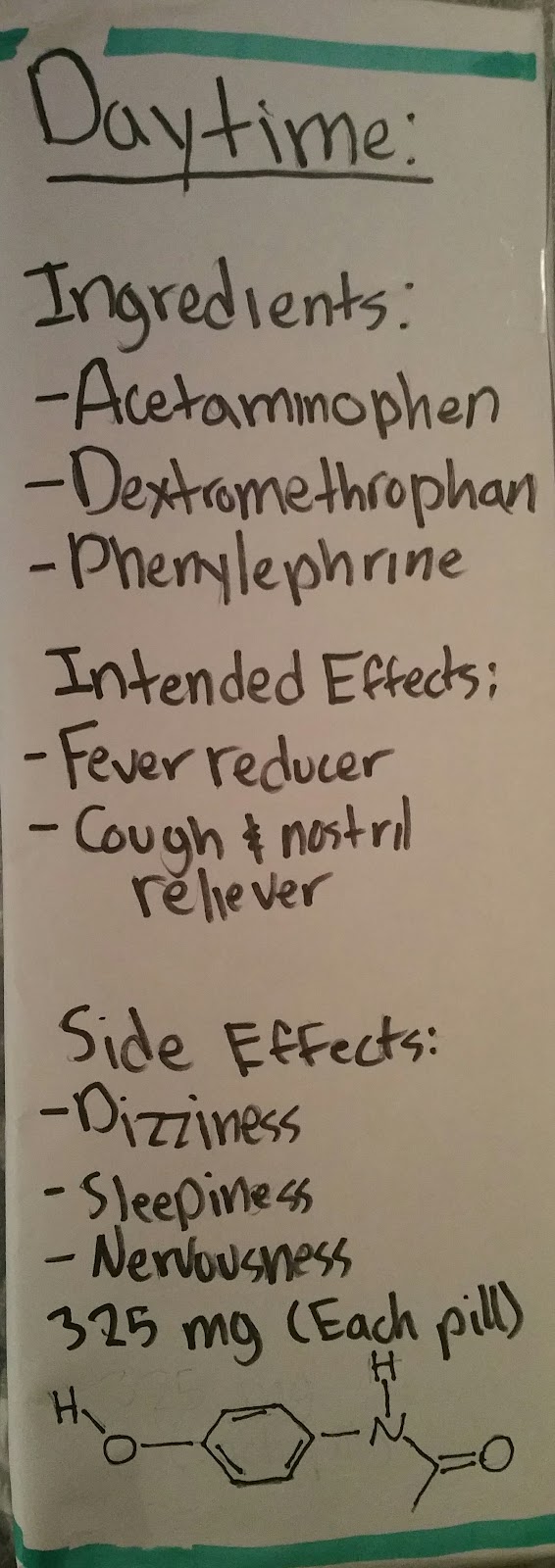
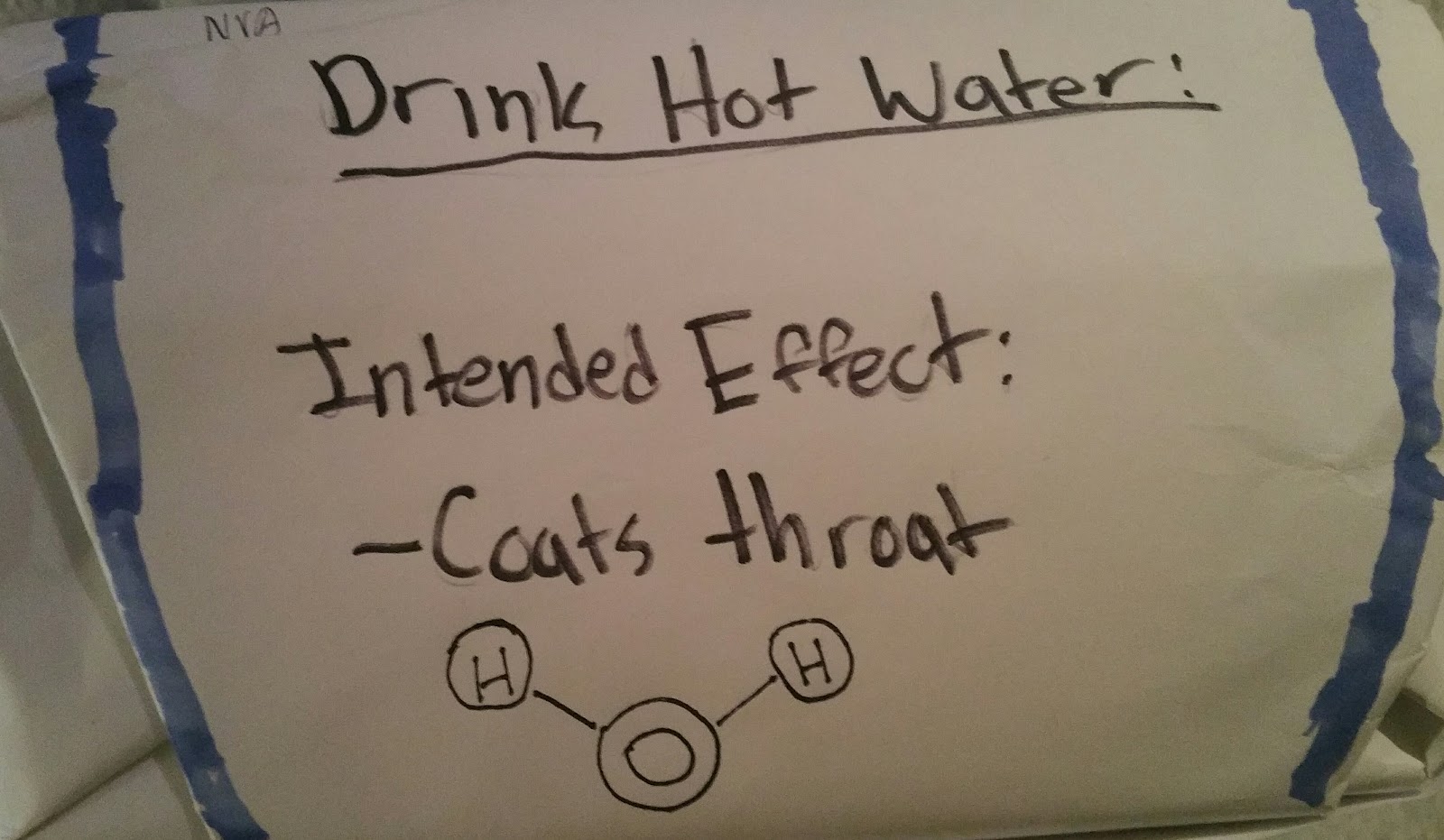
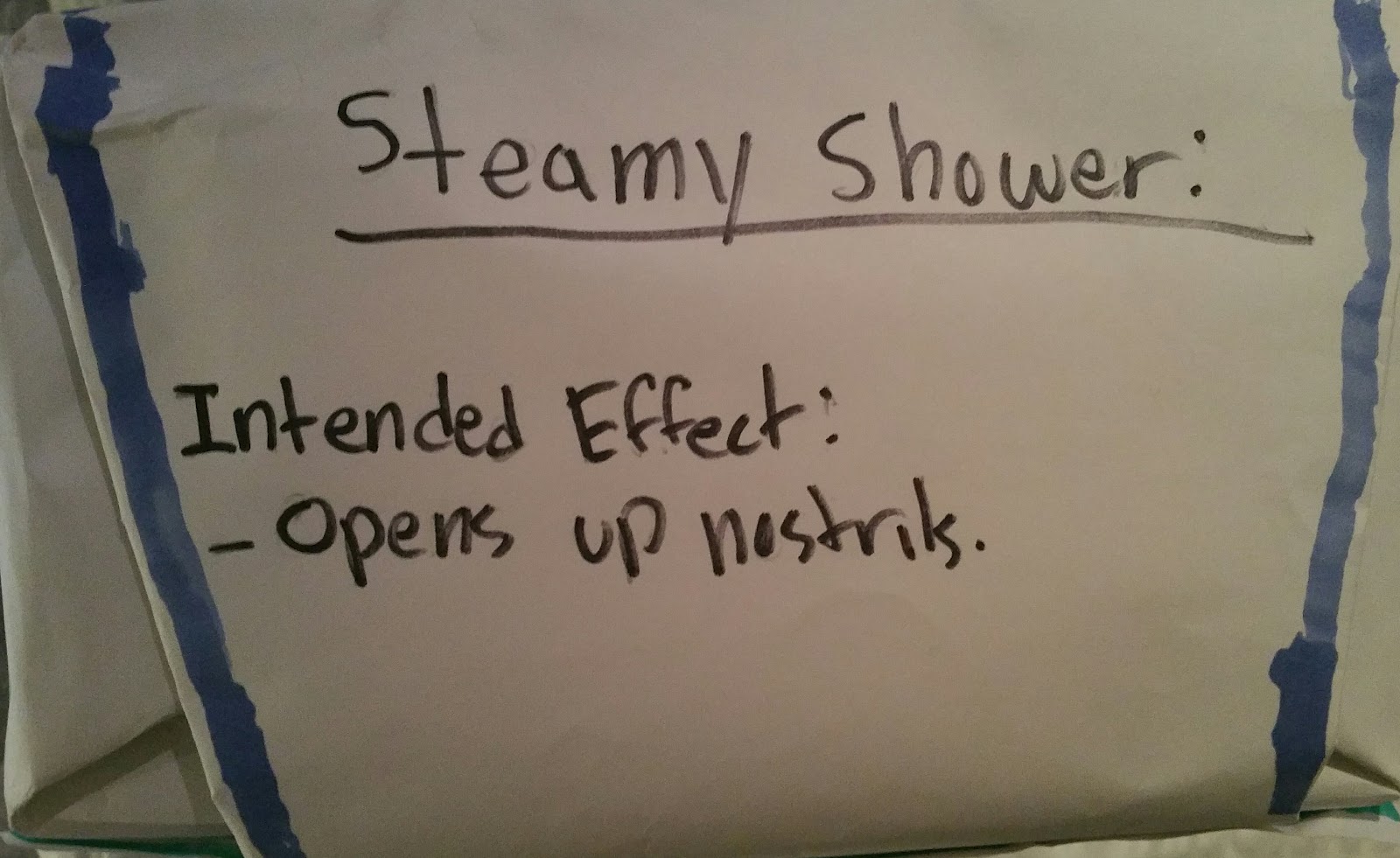
 |
| NVA "The Common Cold Box" 5-09-15. GCE Lab School |
Sunday, April 19, 2015
Spinal Disk Replacement
In Unit 1 of my Cure course, we learned about different ways to approach math problems like substitution and elimination, but most important we learned how cells work in the body. We also learned the different parts and the organelles inside of the cell and what they do. For the action project we had to create a Prezi presentation on a surgery of our choice and explain the organs involved and the cells they are made up of, and what happens in the surgery. I picked the replacement of a disk in the back, mainly the lower part, and I thought this would be could because of how serious it can be if the surgery were to be done wrong. The purpose of this project was to see how different cells in the body have very different ways of working and to show in a real life situation.
Sunday, March 22, 2015
Why We R Naught Wanting Smallpox to Happen Again!
In unit 3 of my Disease class, we learned about, the different type of epidemic and the levels that one can reach. We also learned about R naughts, which is how many people can get sick/infected from one person. Next, we learned about correlation and causation, correlation is when two events during the same time period have the same rates (one not really causing the other). Causation, is the same thing, but they are caused by one and another. For my action project, we had to pick a disease that has become an epidemic. When we do that, we had to find out what the R naught of it is, where it has happened, and talk about factors that might lead into it. The purpose of this was to see how some epidemics are caused by a lot of different things, and to see how infectious one can be. The disease I chose was smallpox, mainly because I have always been interested in how it was used as biological weapon for war a lot, and wanted to know why they use that one. The only real challenge to this was mainly that, it was hard to find different factors, that would be on a certain website we used to make our graphs, to correlate the correlation and causation factors of a disease.
Smallpox is an infectious disease, where it can be very hard to know when you have it, causing people to spread it around more. It is a disease that comes from the variola virus, and the incubation period can take from 7 to 17 days. In that time it is able to spread to other people, without them knowing until it is too late. The type of symptoms that will be shown are high fever, vomiting, back pains, those are the starting ones. The one where you know you have smallpox is when a rash starts to form on the head, hands, feet, chest, and soon everywhere; after those that have happened, blisters will start to form on the rashes and they will have a clear liquid in them and soon pus will be in them.
The R naught of this disease can range from 5 to 7, meaning from one person, 5 to 7 can get infected from that person. As I said before, it is hard to tell when you have until it’s too late and you have passed it on to others. From that, it should be able to tell how this can lead to big epidemics. The first cited one was from the thirteen colonies when the British would bring the disease to people that have never been exposed to it before, Native Americans. Soon it started to spread all over the world, but in different time periods, not making it a pandemic, another area in which it has spread would be Australia in 1828. From that date it just proves that disease is really dangerous and go anywhere and be anywhere. The area I want to focus on more is when it was in India in 1974 when smallpox, which was the most recent case of a smallpox epidemic, which happened in January and finished in May. In this time it killed 15,000 people in that time. Now both of those are very dense in population, meaning people would be living together in a close environment, and this is one of the biggest factors. Another factor that should be addressed, is the lack of doctors in some areas, now even if there aren’t in some, we need more doctors to help it be contained or prevented.
It is eradicated today and is not seen anymore because there is a vaccine made for it, but even the vaccine can be a problem; this is because if too many people get the vaccine in one area, it can spread faster than the actual virus itself. In 1979, it was declared eradicated, but it is believed that WHO or the CDC have some samples of it just for study, or for biological warfare. Prevention is one of the hardest things to do since it can spread without anyone knowing, so the main prevention to do for people in that area is stay away from anyone that is showing symptoms, and for a city or the whole area I would actually say to get more people interested in being a doctor, so they know ways to help the community. Just as a prevention tip for everyone is always cleaning your hands so that if you are in contact with someone; or with someone with the disease, if needed to go out just wear a mask so people aren’t contaminated with it.
 |
| NVA "Smallpox Graph" 2015. Gapminder |
The picture above shows how drought, or when water is more available, the disease is more likely to show up in India. This shows, that smallpox could actually appear more when the water is good, meaning people will be drinking water a lot, and when that happens it is easier for people to possibly drink from an infected person’s drink.
 |
| NVA "Areas that have had Smallpox" 2015. Gapminder |
References:
Subscribe to:
Posts (Atom)