Pages

Showing posts with label Humanities. Show all posts

Thursday, June 1, 2017

Learning To Survive

In my unit 3 of my class Endurance we learned about the aftermath of being in hell and coming out better people from the heroes journey. The main people we looked at was the writer of Night Elie Wiesel and a man from Africa that was a child soldier and was able to escape when he got older. As far as field experiences we, for the first time, created our own! Mine was going to CineSpace, a landlord basically for production companies that need space to film or a hub to go to so they can talk about the film's progress. For the action project we had to create a survival book for our future goals in life. For me that is becoming a director in film, where I was able to talk about what I need to be prepared for, what materials I will need, to set a timeline of what my future might hold. This action project was pretty simple I would say and I liked doing it, like the others it helped with figuring things out for my future and I am very grateful for that. Something I didn't like was that we had to think about the future so much, I am someone that likes to not think about the future but this was something that I felt helped a lot. I really hope you enjoy, and if you hope to become a film director I hope this is helpful in understanding the field!


Nicholas’s Survival Kit
(Film Director)
NVA ”Take One” 2017.

Become The Director, Be The Director


What?:

My dream/mission is to become a film director and work in the film industry, I want to pursue this because I am very into art. With art, it can be very hard finding jobs and films are in art form that I a lot of people like and can get into. Not only because I see film as an easier art form to get into, but I also really like being able to work with so many people and be able to create something and make it real for people to experience. On the note of experience, I get a lot of emotions when watching films, and I know this is true for just about everyone, I want to spread that and have people talk about what their favorite movie is and why it made them laugh or cry. Right now I am in high school as a small independent filmmaker and soon going to college to study film. After college or during college I hope to become a director in film that is highly recognized, I want to change up the game in some films to keep people more interested!


Lay of the Land:

To be a film director the main job would be a director and then from there I can grow and do more such as acting or writing. The requirements are very varied, because a lot of people have become directors for blockbuster films after being an independent one for so long. But for me I want to go to college and take classes that way I can learn from people in the industry and network more, this way when I get close to graduating I can contact my teachers and see if they can give me a job. That is the main reason, also I feel college is helpful for many things and I know that it can help push me to be a better director. The requirements at Columbia to graduate a Director would be to take multiple classes where you study directing, acting, screenwriting, lighting, set design, almost everything; this way when you start the working with a crew you know the kind of language they use to work and function when doing their own jobs. The best person I can learn from is really myself and see what I do and how it can change to be better. At school, the best people are my teachers because they have knowledge and experience you want. Something very important is that while I am going to school, that piece of paper doesn’t mean much when I graduate because it is more based on the work I make and if I good features; college does help a lot though with networking. According to The Department of Labor, on average a film director will make about 70 grand a year. That number is only a mean, it is very hard to tell how much they will make because as I said it really comes down to work you put in. It is very important that in my career I have made a film reel to show off to people so they will hire me to be the director for that film, otherwise they won’t want me. Something interesting I found on Sokanu, is that the peak for maturity in this field is the age of 62, meaning I have a lot work to do to make sure I can lower that number for myself and prove that I am a great director. Right now more people want to be film directors and the growth rate for them coming in for the next 10 years is estimated to be a 9.1% growth. The film field for a job is very hard, and keeping a stable job is not really option because it all focuses on how much work I am willing to put in. I am prepared to do this and I have realized what I need to do, once I start college I can start doing what I need, which is work! I have already made three films of my own and have worked with a film company for a day doing multiple things, meaning I have a good start.


Timeline:

2017 - Made three films of my own

2017/2018 - Start college

2019 - Start directing my own films in school

2020- Graduate with a BFA in Cinematic Directing

2022 - Start interning at a production company

2023 - Get a paid job to start working myself up to being a director

2025 - Prove myself to be a good director

2027 - Direct my first blockbuster movie

2029 - Go to Oscars for new young Director

2035 - Direct my third blockbuster

2037 - Start collaborating more with independent artists


Materials:

The resources needed for this actually aren’t to bad to get, what I will need in college are the classes and money for the classes. I am going to Columbia College in Chicago and tuition normally is about $28,000 each year so in all the four years I will have paid $112,000. It might not even be that bad because for this. Scholarships are involved meaning that I won't have to pay that much exactly. As for other supplies such as a crew and equipment, most of that will be provided for me when I am in school. Then, when I am in the industry and I am a director, the crew and equipment/space will be paid from the production company and not me directly. In the beginning it will cost a lot, but if I learn to really take advantage of that money and time, then in the future it will pay off.


Non-negotiables:

There are a lot different roadblocks that can happen, and I feel that depending on what it is will determine what I will sacrifice. I will not sacrifice the fact that becoming a director is very important to my life and if someone or something is getting in my way; such as certain relationships I will need to really think if they are worth keeping to better further myself and my career. As for if it is something intellectually that I need to know then I know that I will be willing to put in the time in college or outside to make sure I have mastered what I need to get over.


What if?:

Worst-case scenario is that the film business is failing and I can’t become a director because the need is being lost. In that case I will have to find another job where I can use my knowledge to become an independent filmmaker and share my own work with people that still respect the art form or even become a teacher to people that want to become filmmakers. I have also thought about a business that I can create that will bring independent filmmakers closer to blockbuster production companies so that there is a new element that the want for filmmakers and directors will go up. Also something I need to prepare for is the simple fact that I might not want to do film anymore and I need to find a new field. I don’t know what I will do if that happens, I might try my best to finds something different in art where I have a good amount of experience that I can switch into. I think I would try to go into business because while hard it can be very good invest to study more. That even goes with my plan if the film industry was failing, because while I wouldn’t be doing films directly I would still have knowledge that isn’t thrown out of the window.


Inspiration:

“Pick up a camera. Shoot something. No matter how small, no matter how cheesy, no matter whether your friends and your sister star in it. Put your name on it as director. Now you’re a director. Everything after that you’re just negotiating your budget and your fee.”
- James Cameron


“A Lot of Times You Get Credit for Stuff in Your Movie You Didn’t Intend to Be There.”
- Spike Lee


“I think audiences get too comfortable and familiar in today’s movies. They believe everything they’re hearing and seeing. I like to shake that up.”
- Christopher Nolan


“But having a really good understanding of history, literature, psychology, sciences – is very, very important to actually being able to make movies.”
- George Lucas


“If a Million People See My Movie, I Hope They See a Million Different Movies.”
- Quentin Tarantino

These are five quotes by very famous directors that I really like because they prove to step out of the normal and to just work and prove yourself as a director.
Map:
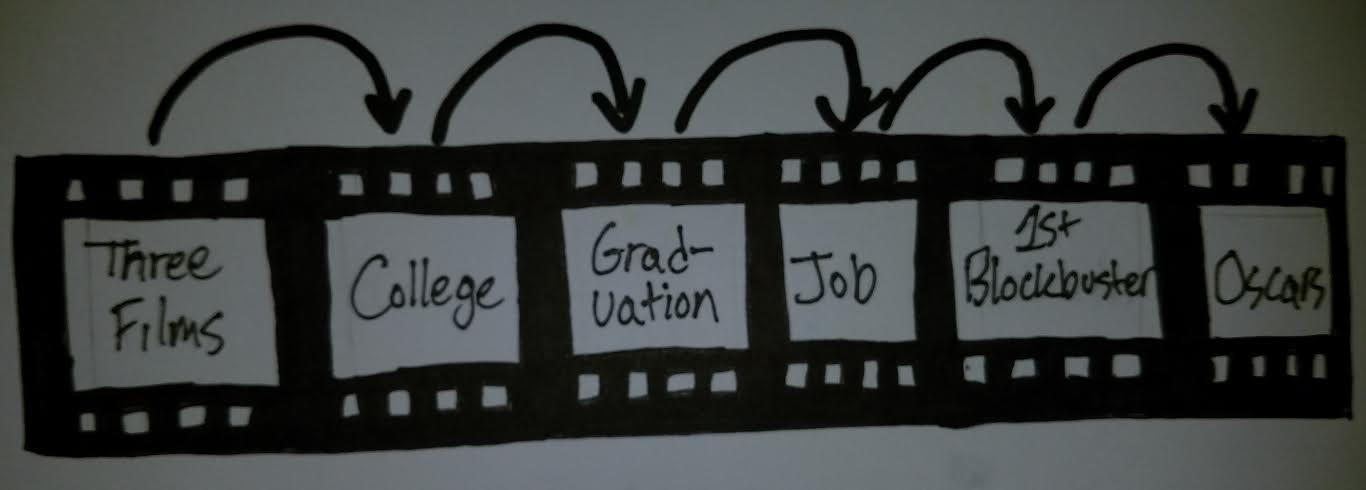
NVA “Map of Directing” 2017


Advice for Others:

If you want to be a film director, then start working, it something I have start doing and it has helped me so much. I have only made three films, in each you can see more growth in each, not a lot but enough to know that I am heading down the right path. I would say school is important to go to and learn what you can, the professors have worked in the field and know what they are talking about and know people that can get you a job. This is an amazing field that has so many benefits, you literally just need to work, keeping working and proving yourself. This is a path that where reaching the end is very difficult.


Sources:

"Summary." U.S. Bureau of Labor Statistics. U.S. Bureau of Labor Statistics, n.d. Web. 01 June 2017.


"How to Become a Film Director: a Sharp Reality Check." Learn Filmmaking | Articles and Blog for Filmmakers. N.p., 05 Feb. 2017. Web. 01 June 2017.


"Film Director." Sokanu. N.p., n.d. Web. 01 June 2017.


"101 Great Filmmaker Quotes." FilmmakerIQcom. N.p., n.d. Web. 01 June 2017.

Sunday, May 14, 2017

The 12 Hour Delivery

In Unit 2 of Endurance, we read more of Dante’s Inferno looking more at what the nine rings of hell were like. We mainly looked at people that put themselves in situations that call for a lot of enduring. One person we looked at was David Blaine, the magician, and his process for staying under for 17 minutes. Then, we looked at this girl Laura Dekker, who traveled the world on a boat by herself at the age of 14, and looked at her process through doing that. Both of these people had goals in their life that they need to fulfill to be whole. That’s where the action project comes in we had to figure out what our goal was in our life, for me it’s filming and becoming a director. So for the action project, we needed to figure out what we could do for 12 hours to get one step closer to our goal. I in these 12 hours I wrote a script, found actors, location scouted, filmed and edited my video together. We also had to document what the process was like and show what things we had to prepare for and random things that came along the way when trying to do these 12 hours. For myself, I made a film called, “The Briefcase” where this one man has to make a life changing exchange to get money for his family. I faced a lot of small challenges during this process, such as writer's block for example. What I liked about this action project was it really helped me get back into filming and that process and also taught me so much. Something I didn’t like was having to document myself while filming and doing tasks because it became a nuisance. Down below is my film I made and the video my process and all the things I experienced, a behind the scene if you will.


The Process behind filming:

Sunday, April 30, 2017

Chapter 1 Of My Life

In unit of my new class endurance we looked at different things people in the past had to endure both mentally and physically, and how it got them to be the amazing people they are known to be. We even did some endurance challenges of our own; the first one we did was sitting for 10 minutes without moving or sitting, something a lot of us were not able to do. The second one was holding a chunk of ice for 1 minute, two times; some people didn’t make it the first time and everyone did second time. Lastly, we had to do a boot camp training exercise with a teacher of Karate. As for the action project, we had to imagine ourselves 50 years in the future, for me that would be the age of 68. In this age I am writing an autobiography about myself and the mission I have for myself when I was a kid turning into an adult. I had to talk about the many things I had endured and how they got me here. I enjoyed doing this because I have such a strong mission to be in the film industry, and this only helped fuel the passion. There wasn’t anything I struggled with, I would’ve liked to have tried this not in essay form possibly. Below is the first chapter I have created my future book, hope you enjoy!  


Chapter One:
Understanding

p3MediaWorks"On Set" 2016.

I was born in Bulgaria and adopted when I was the age of one by a Greek family in Chicago. I was raised in the northwest side of Chicago, having a more privileged life than others, but it would take longer time to realise that. Growing up I would always make sure that I was good student, always messing around with friends on the weekends. When I was growing up a lot of people would want to go partying, where my friends and I would just drink pop, and play video games till the sun came up. Then as soon as the week started, I would jump into my school work, pushing through all the stuff I needed.
Then sooner than I could see, high school hit me. I was a very poor test taker and because of that I would make sure in the classroom I was doing amazing. I was going to go to school called Notre Dame, having to be part of their special ed program. This was something my parents and I weren’t happy about, but I was determined to prove them wrong and make my way up to an A in my classes. Then a funny little thing happened, I was found on the waiting list of a school named GCE Lab School, a small school still starting out. I visited this school and saw that this place was for me, classes where every student had a say, not just in the classroom, but the entire school the students would have freedom. In the school, there were two classes and instead of tests, it was mainly projects. This was a big mental challenge for me at first and something I struggled to adjust to, but after I did everyone saw that I was growing as a person. The school taught me so much about myself and the city I lived in.
Outside of school, I was doing various activities such as teaching myself to learn to ride a skateboard, taking martial arts, and learning more about my Greek language. I was always pushing myself to learn new things to help my body and my mind. My freshman year was when I when I had big physical challenge of breaking my arm for the second time, and after that I always to take care of it and make sure it wouldn’t break again. If it did break again, I would have to do special programs to make sure it was taken care of. I would take care of it by doing yoga and sports, this making me more careful with my body. In my years of high school I kept changing my idea of what I wanted to do with my life, when I would go to college and work. At first, it was an architect because my that was dad did, and I liked art and math which architecture catered to. Then in my sophomore year and junior year, I wanted to work for the CIA because I was training with martial arts, and I wanted to use those moves to some good use. After finding out what I would really have to do to get into the CIA, I decided it was something I wasn’t interested in. Late into my junior year, I wanted to do art more, and I was more into films. That is when I found my passion and what I knew what I could do: become a director.
To become a director I knew I had to go to a school, that would have great classes for that. I started applying to a lot of art schools with film programs, because I also wanted to study various art styles. I applied all over, but knew I wanted to stay close to home, the place I wanted to into the most was Pratt in New York, because for one it was a great art school, and to study film in New York was my idea of amazing and the perfect school. I had a list of all my school from which one I wanted to go to the most and the least:
  1. Pratt Institute
  2. Rhode School of Design
  3. Art Institute of Chicago
  4. Columbia College
  5. Savannah School of Art and Design.
To prepare I was making my own films each one better than the other. I was even taking classes at a small art school called Marwen to get more knowledge, doing animation and GIF making classes. Everything I was doing would be to prepare myself for film school.
One of the biggest road bumps I never saw coming was making an art portfolio. I didn’t rush to make one, but was smart and found old things I have done that I have done as a projects and found out those would work, plus my films I made, making the art portfolio I knew I could put together.
Now let’s jump forward a little, to my time in college studying film at Columbia College, and yes it wasn’t very high up on my list, but after looking at their film set, I knew this was the perfect place. My first year was very difficult having to adjust back to normal school tendencies; I hated having to take normal core classes such as English, math, science, history. But, I knew that if I could do great in those classes and pushed through I would be able to get to the filming.
Once I was filming I was loving it, getting to work with so many people that all had the same passion as me! Having such a great place to work on my ideas and learn more, to study all the things I ever dreamed for. There have been a lot of times where I will argue with the people I am working with because one of us wanted the film to a certain way. We would always come to some agreement, not really happy but able to still make it amazing. I would learn to make so many films, some being a noir style, some being animation, POV, anything you can think of! I was trying everything.  I needed to fuel my need to learn and grow, because I was determined to work my butt off to show what I was made for!
I got the second chance of life by being adopted, and I was going to show that it was worth it! When I was 18, my friend and I were talking at Starbucks and he was said that, “A strength you show is powering through extremely difficult situations that could make or break a young adult.” I took that in such a positive way that I knew that I could do this and that I could be the film director I decided to be in my junior year of high school. My journey through all these parts of my life reminds me of Frank Worsley the captain of The Endurance, because on his journey he a lot of challenges, but each one only made him stronger and fight harder. All of my challenges lead to the best moment ever, the film I am most proud of.
The film I am most proud that I made when I was a senior was an action film that incorporated animation in it, I called it Surfer. It is a style that has been done before but not very common anymore, and at the time I knew it would be amazing… and it was! The film was about a man that discovers and he can enter any TV show he wants and make his life just like the show. This was something that took me months to make from all the design aspects, but my professors loved it and so did everyone I knew! I was able to bring another style to life. Not only did this film get my myself an A but it was able to get my name around in Hollywood and the filming community. Soon more people wanted it to be shown all around. This lead for so much success, and I learned something important: Understanding the things you endured as a young person are what got me where I am today, is the most important thing ever.

Thursday, March 30, 2017

Chicago Mix

In my new class Mixtapes, we studied Blues and Jazz and the historical context about those styles of music. We also learned about what goes into making music today versus the past, and how to improvise different sounds together. For FEs we went to Columbia College to sit in on a music theory class that was learning what we were learning and we learned more about Bebop Jazz music. We then the next day went to Stony Island Arts Bank to learn more about House music and how it grew in Chicago; we looked at some pieces from Frankie Knuckles, who was the founding father of House music. Lastly we went to Electrical Audio Studios to look at recording studios and how people record their music. For the action project we had to create a playlist of 5 different song that we think would be good for the Pitchfork Music Festival and explain how they show an attitude towards the world. I liked the range and the freedom we had with this project, because I feel the songs I picked were great, and have a nice range of genres. There wasn’t anything I didn’t like because I thought that this was a very fun project to do and think of. Below is my podcast of the 5 songs I thought would be best for the festival, hope you enjoy!


To listen to the full version of all these songs click the links below: 

1. Childish Gambino - Me and Your Mama
2. Panic! At The Disco - Death Of A Bachelor
3. J Balvin ft. BIA & Pharrell Williams - Safari
4. Chance The Rapper - Summer Friends
5. Georgie Porgie - Life Goes On

Friday, February 24, 2017

A Civil Future?

In unit 2 of my class Equality, we learned more about what we did in the past unit, but focusing more on the present and future of what race, gender, and class looks and will look. For a FE, we had Elizabeth Dozier come in and talk about what she is doing to help the people of Chicago. We also we went to go see the new film Hidden Figures. This helped a lot at looking at how race put our nation very behind in the mission to get to space. For our action project, we had to create a newspaper article for the future, 2117, on an issue we see would be alive during that time. Then create a toy that we think that children would have to play with, and a law/policy that should be in place to that future issue. For my issue I chose the subject of class, and how when there is a lack of a business in a certain neighborhood it can affect a lot. Something I liked about was that it pushed my creative mind to try to think further than the here and now. Something I didn’t like was the openness of it, because it was a little difficult to think of what can happen in a 100 years. Please enjoy reading my news article!


NVA Times


Feb 28th, 2117


Mariano Foods Stop Putting Stores in Low Income Neighborhoods:
History and Present:

Back in 2019 Whole Foods and Mariano’s boards came together and joined as one company, sharing resources and profit. The new company blew out the competition, even putting Aldi’s out of business. After many years business has been slow and quality of products lowering from expansion of stores, the board decided yesterday that they are taking their stores out of low income neighborhoods. The president of the company has this to say, “We have for years been losing money from all these stores in low income neighborhoods they are placed in. We decided to put them in high income neighborhoods so we can make the quality of food as good as possible again.”

Responses have been very negative from people in the neighborhoods they are pulling the stores from. An estimate of 1 million people have lost their jobs, and others have now to take a longer commute to get their jobs. Because of this, we are going back into our old ways of having food deserts where only fast food is the option for people in these neighborhoods. Sean Israel has this to say, “I had been working in that store for 5 years providing for my family, and now I have to work at Wendy’s which isn’t paying as well.” Sean is one of a million to have lost their jobs due to the company's decision to take their stores out.

For further expectations, we will see from the company if this was a smart choice or it will make it worse for them. Many cities are worried that now we will be back tracking into the early 2000s because very hard working people can’t have fresh food available to them. Mother Jean Harris has this to say about her children, “I am someone who wants my children to always eat healthy. How are they supposed to do that now that Mariano Foods is taking their store out of my neighborhood. I can’t drive up to the suburbs to get that food.” This is a very tragic event for many people, with cases from losing their jobs and fresh food, to now having food deserts again.
NVA. "Pop UP Tea Ad." 2117

New amendment signed into order:


28th Amendment:

Each state must have an equal amount of store and restaurant options in every part of the cities.
Response:

Today is Feb 28th, 2117, my name is Valentin Lubinov. Living in this world is very interesting, so much better technology than the ones my parents and grandparents carried. I really don’t understand how they were able to survive that way. Because of Donald Trump’s election many things were set into motion over seas. A war has been raging for a while now, but it is mostly just threatening and no true action as been done yet. Racism is alive still although many people try to pretend that it is gone, but nothing is changing. Funny, my grandparents said something very similar to that me when I was younger.

As for the Mariano Foods moving their business to high income neighborhoods only, many people have lost their jobs, including some of my friends. I think it will blow over, and the company will realize that they need to go to being everywhere. It really helped people with their jobs, I don’t really understand why they would do something like that. Then due to that they might sign the new amendment into place that says they can’t do that, so that these people can have their jobs back; I would be more than happy to see my friends get their jobs back.

Our new President who is the second female president since 2020 is wanting to see a lot of change. For a long time, our society has been falling back onto old trends, like when I was reading about Donald Trump when he was president. I can’t believe a man like that became president. I am really glad that this president wants to make good change, and see more equality in our world today. As for the environment itself we are really trying to keep everything healthy but it is very hard with population we have the amount of needs that need to be met. Our new president, Mary Frank will make sure that we start to preserve land even more, and make sure that each town has some kind of park.


Friday, February 3, 2017

Marching for the World

In my class Equality, we went over the basics behind race, gender, and class, and all the ways in our world we aren't equal with these three subjects. We did have a guest speaker, Elizabeth Dozier, where we got to talk about issues in our city, Chicago. For our action project we had to make a history book chapter on a big event and show how to relates/effected race, gender, and class. The event I chose, was a very recent one, the Women's March, which happened on January 21st, 2017. This was a march for women's rights but turned into something much bigger. Something I liked about this project was that we got to choose any event, and really show how it connects with race, gender, and class, especially because it was so soon. Something I didn't like was that it had to be like a history book because the format of a text book is very hard to really copy, so I really had to play around with everything and make it look nice. Please enjoy reading my chapter in a history book for the Women's March!

Wednesday, October 19, 2016

Comedic Genius

In unit 2 of Journalism we learned about how to formulate a podcast, and make sure one can flow very smoothly. We did by following what Ira Glass had to say on making a good story, and doing it in a podcast form. For an FE, we went to Columbia College, to their Journalism Department, where they do TV and radio broadcasting for class. For the action project, we had to think of a famous person in the 20th century, and make a podcast about them. In this podcast we had to explain why they are famous, and we had to tell a story about them. The person I chose for this was Jim Carrey, for he is one of my favorite actors. He also has a side to him not many know about, and it is one that I really wanted to show in this podcast. Something challenging was getting the story together, and editing the podcast together. What I am proud of is that I got my message out, but in the podcast, I tried to do what Jim Carrey loves to do, which is getting people to smile. I did this by trying to add humor to the podcast. Thank you and I hope you enjoy listening!


WHEN

WHO/HOW

WHAT
00:00:00 to 00:13:47


00:13:48 to 01:02:52


01:02:53 to 01:07:07


01:27:81 to 01:32:30

01:32:31 to 01:50:30


01:51:47 to 01:53:64


01:53:65 to  03:36:55


03:36:56 to 03:44:76


03:44:77 to 04: 15:92


04:15:93 to 04:22:42

04:22:43 to 04:29:03

04:29:04 to 04:40:43


Jim Carrey voices fades


Background Music starts
(“Ambient Background” by Soundshrim)


My voice fades away


My voice fades


Her voice faded


Song fades out


Jim Carrey: I watched the effects of my father’s love and humor, and it altered the world around me, and I thought, that’s something to do. That's worth my time.


NVA: From GCE Chicago High School, this is NVA, today we are going to be talking about the famous Jim Carrey. Jim Carrey is a comedian that became very famous in the 20th century, from doing In Living Color, Liar Liar, Truman Show etc. Now let me talk about what I think of him first, then we will see what someone else thinks about him. While I am talking, please think of what you think abou him. Is he just a goof? And afterwards did anything about your view of him change? For me Jim Carrey has always been this person that can make me smile. When I am feeling down, or need some reason just to smile, I would turn to him. Watching so many movies he is in. Going on Youtube and looking at his funniest moments from various movies, interviews, and impressions.

Jim Carrey: You love me, you really love me!


NVA: I learned something when I stumbled upon a video. Jim Carrey is very inspiring, and wants people to just do what makes them happy, and spread that happiness through what they love to do. Many people view him as a guy just acts crazy and loud, I see him as someone that wants to just make your day better in any way possible.

Jim Carrey: The purpose of my life has been to always free people from concern.

NVA: So today we have M.A. with us and she has been able to see his comedic genius grow throughout the years. And so, I want to ask you what has been like to see this progression and how has he changed the comedic scene?

Jim Carrey: Hold on I got to warm up, I don’t wan’t to pull a hammy!


MA: Well, Jim Carrey started out in a TV show called in Living Color and he was just kind of a stand-in. He was not one of the A-list, and he quickly rose to stardom with his impressions and rubbery face. One the things about Jim Carrey however, is that he really is a comedic genius. In order to be a comedian you have to be quite smart, you have to be able to ingest the news, ingest what’s going on in the world/worldwide. So you can relate comedy to it. Jim Carrey, thought most of his movies he does play kind of a goofy guy, I don’t think he has written any of those movies but he may have. He may be typecast- ed as this goofy guy but in reality he is brilliant and really comes off making the movies moe in depth and inspiring for people. Even the Cable Guy, which really is.. I thought it was a funny movie, it kind of taught you something about people at the end; and I think that’s something Jim Carrey brings into his movies.

NVA: So he can make society a little more relatable for you, in his comedic genius?


MA: Yes, Jim Carrey comes off as a goof but in reality he tries to inspire, the youth, by sending them messages in some of his Ted Talks and different podcasts about how life is short and you need to do what makes you happy and strive for excellence.

Jim Carrey: My soul is not contained with the limits of my body, my body is contained with the limitless of my soul.


NVA: Alright thank you MA and thank you for everyone that listened, I hope you enjoyed this!


Jim Carrey: Okay I'm gone! Taking off! See ya… bye!

Thursday, September 29, 2016

Picturing The Meaning of Life

In unit of 1 of my Humanities class Journalism, we learned about the what being a journalist means; we also looked at photo journalism, and how you can tell a story with one photo. For an FE, we went to Wienberg Newton Gallery, and we looked at an exhibit with photos of the spots where someone was shot in Chicago. This was really in impactful to see how one image can old so much meaning behind it. As for our action project, we had to interview someone about the meaning of life, and take a photo of them. This photo could just be them in their natural environment, but I decided to do something different. What I found challenging for this project was thinking of the right picture to take, and showing that the picture has meaning behind it. I am proud of the image that I ended up using because I put a symbolism into it. Below you can learn about the interview I took and see the picture I used. Please enjoy!


There are so many things happening in our world right now, every few seconds someone dies, someone is born. The planet is changing, we are evolving. But--What is the meaning of it all? Why do we do the things we do, why does the earth move it does? What is the meaning of life? Just ask yourself that.

I asked myself that, and then I went out to interview someone to ask them the same thing. The man I am interviewing is AA, my father. He is 57 right now, he is married, he is works for the City of Chicago as an architect. He has sister and brother, both living life happily. He is very involved in the Greek community, going to church, parades, and any special events. He is always giving a happy vibe to everyone around him. I thought he would be perfect to interview, because he has experienced so much, and still has such a happy face.

I asked him, “What is the meaning of life?” he responded with, “It is to able to leave good thoughts behind so people can continue to do good deeds and be smiling as they do so. I say this because now of days everything, TV, newspapers, and social media are about disasters, murders, it is all bad news with no good thoughts.” I really liked that response because I believe the same thing, there is too much bad in our world.

I followed with a question that, I think, is very important, “How do you represent your meaning of life?” He replied with (speaking in Greek), “Do good and good comes back to you.” Let me explain first why I think that was important question. These days, a lot people will say something or judge someone and not follow what they said. I knew he was going to say that because I always hear him saying that to me. He even says it to others. They will ask why he does certain things, and he is never hesitant to say, “Do good and good will come back to you.” Next I asked if he was taught to believe this because he taught it to me. He answered with, “You aren’t really taught you are mentored that way from everyone, and everything around you.” I connected a lot with this answer, because it is true, the people, the area, that you live around really makes you the person you are; it does this either in a good way or bad way.

Speaking of that, my next question was, “What’s your advice to people that have bad all around them?” He responded with, “Time will tell and everything will work out.” I expected something different, but I was happy with what he said. I say this because a lot of people think where the place they are is where they will be forever. This isn’t true, if you work hard and always keep a positive attitude it can change for you, change for the better. Lastly, I asked him, “Has your definition changed overtime?” He was quick to respond, saying, “My definition has gotten stronger in a positive way. It has changed for the better.” This is an answer that I was surprised to hear, mainly because so much can changed in 57 years; you might define something differently than you did 20 years ago.

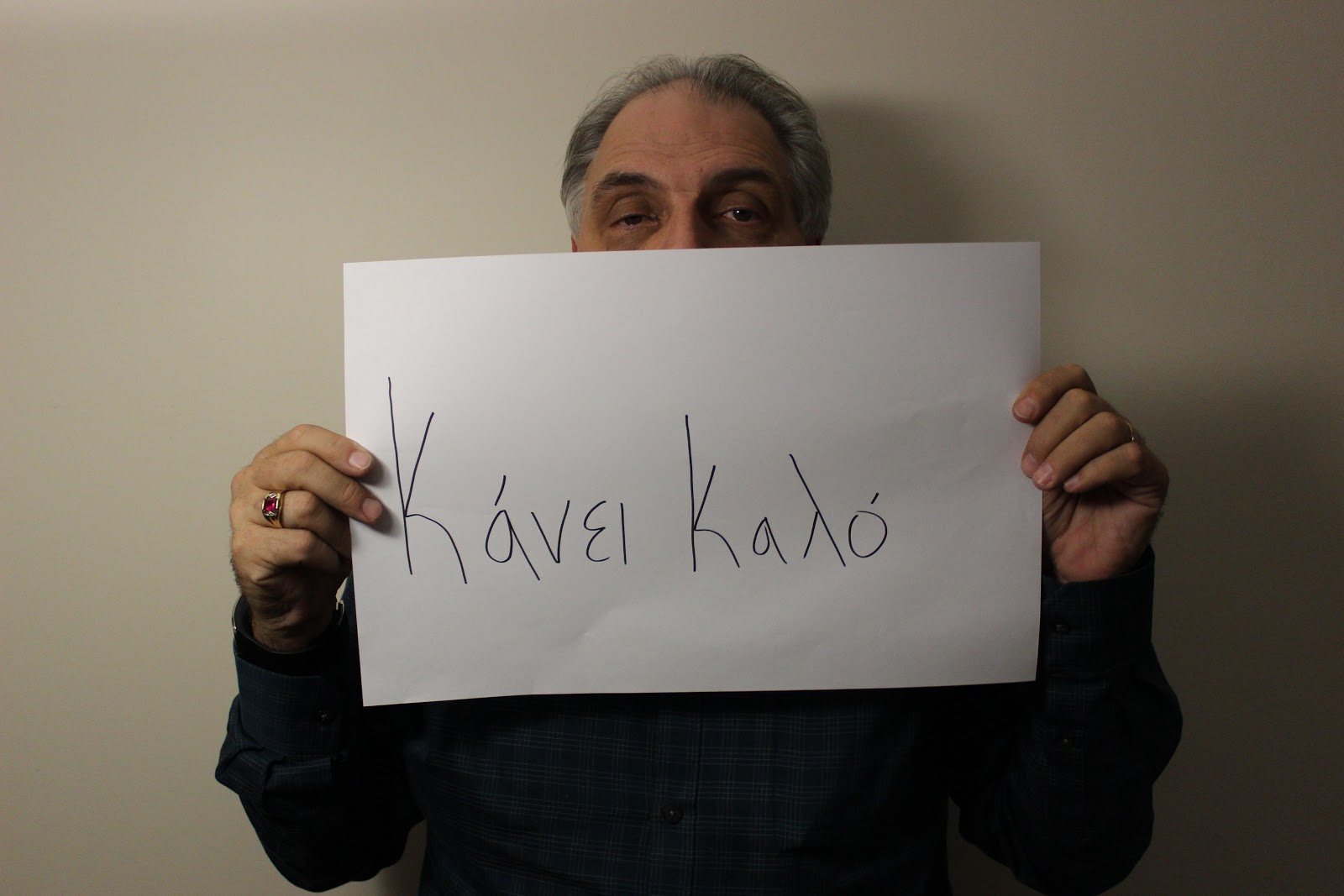
NVA. "DO GOOD." 2016. Chicago
Above is the image I have chosen to use for this article. I used this one because I liked the symbolism behind it. The first piece of symbolism is the how the dark the image is, and the background. I did that because he was saying there is so much bad news, bad news you see in: social media, newspapers, and TV. Now, you might be wondering what the sign he is holding is saying. Well, that is Greek, and it translates to “do good” which was his message during the entire interview. I also had the light focusing on that sign, so it shows how much he tries to represent that. In addition, he is only showing half of his face, because it adds to the realness of the situation, how he always tries to do good, that it is normal to him. He just does it, without any expression, he just wants to spread good, positive views.

When it comes to the aperture, shutter speed, and focus, I didn’t really do anything special with those aspects in the use of the camera. I really just played around with the lighting around me to get that darkness, and light look. For me, this pictures makes me use my 5 senses and think of something smooth a crisp, I say this because the image is very simple (smooth), but the meaning is very powerful (crisp).

In the end, I really took away a lot from away this interview, I knew some of this information already. It was still nice to hear him explain it more and go deeper in his meaning of what life, and how he always wants to do good. Now go back to what I asked in the begining on what your meaning of life is. Has it changed? Or has it got stronger?


References:
Personal Interview. AA. 2016.

Thursday, May 26, 2016

One Man Army

In unit 3 of Policy we learned about what the judicial branch is, who it consists of, and the powers it can hold. We focused mainly on the Supreme Court and its involvement in the the checks and balances of the three branches. Also we reviewed Supreme Court cases and how they all challenge what the Constitution states. For the action project we had to choose a Supreme Court case and make a presentation on it, which consists of the historical context, looking at both sides of the argument, and if we think it was just or unjust. I chose research the Korematsu v. United States (1944), which had to deal with Japanese Americans being put in internment camps. I decided to this case, because when reading about it, it challenged me to think if it was just or unjust. Something I enjoyed about this action project is that it is in presentation form, whereas the previous action projects have been essays. A challenge I faced was being able to pick a case, because there are so many that it can be hard to find one that interests you. I hope you like reading about Korematsu v. United States!

Sunday, May 15, 2016

Just War

In unit 2 of Policy, we focused on the executive branch, such and the powers and different abilities it has. We also looked the Vietnam War, and the different things it did to people and how the executive branch can make policies that are unjust, like war. For an FE we went to the International Veteran’s Art Museum, where we looked different art work representing the Vietnam War. We also got to try on some gear that veterans had to wear while in battle in an exhibit inspired the book we are reading, The Things They Carried, by Tim O’Brien. For the action project, we had to choose a war and explain if it is just or unjust, and explain our reasoning. I picked the Civil War because this is a war that is a very old war, and show how it had a lot of ripples that lead into the present day. Something I liked about this project was getting to select a war of any kind, even if it wasn’t an actual physical battle. Hope you enjoy reading about whether or not I think the Civil War is just or unjust!


The American Civil War, fought in between the north (Union) and the south (Confederacy), lasted for four years, from April 12th, 1861 through May 9th 1865, not a war that the United States joined but a war that was in the center of the United States, dividing our nation. A war that would push a ripple effect on our society, a ripple that is ongoing. The war was the first where slaves could fight if they had become free. This also was a war that brought our nation together and ended slavery in the United States. But why did this war happen? Mainly it was tensions between the north and south about what was right and wrong, like whether or not slavery should exist. A lot of underlying causes were the Underground Railroad for slaves to use to escape to the north. Also the Dred Scott case of 1857, declaring African Americans not citizens of the United States. The Missouri compromise of 1819, separating free states and slave states. But that was just putting gasoline on the wood, the match to start the flame was on April 10th, 1861 when in Fort Sumter and a firefight broke out between the north and south, marking the start of the Civil War.

Was it good we went to war, or should we have tried to make this civil conflict more peaceful, since this was the war with the most deaths so far? I believe this war was just, and needed to happen because it got people out of the state of treating others as literal property. It ended something that should have never been a to begin with, but was sadly. It gave the line, “All men are created equal” more truth in the Declaration of Independence. This war was a declaration in it’s own way, asserting that slavery is wrong and needs to stop, and our nation has to begin working together again.

The President at the time of the Civil War was Abraham Lincoln, and during his first inaugural speech said that we need to get the south to become part of the Union again, to have the nation working together; this was a month after after the war started. This also had a lot to do with Lincoln’s want and need to end slavery in the United States. Congress played a huge role in this war, in 1861 Congress created the Joint Committee on the Conduct of War. Where a group of people from the south and north would give intel on the war and everything else that was going on that they might need and should know.

During this time two big policies were made, the Conscription Act of 1863, and the Militia Act of 1862. The Conscription Act meant that every man between the ages 20 - 45 must register to be a soldier, even if they were about to become citizens. The Militia Act meant that freed African Americans would work as laborers and soldiers in the war. Both policies were created by Congress, mainly to get more soldiers for the Union. The Conscription Act was hated by many people and resulted in a lot of protesting in New York, whereas the Militia Act had many African Americans ready to sign up and ready to fight, to show their pride. Both these led to the reason why the American Civil War had the most deaths of any war that the United States has been a part of. I say on a legal and logical standpoint that Congress was just for making these policies, because they needed to be made for the Union to have won the war. Plus the acts didn’t go against any policy previously made, in fact it helped one act that was made during the Revolutionary War, saying that all men needed to have a weapon in preparation of war. I say this because it showed how the government need all these acts to secure the victory in the end.

In conclusion, this war was just and needed to happen to make a step to a better society, one where we could work together. President Abraham Lincoln was right to have wanted to free slaves for the greater good, and to bring the south back to the Union. If not, then we might not have won a lot of the wars that we did in the not-so-far future. This might have had the most deaths, and did have ripples both good and bad. But it did lead to the great migration, where many African Americans were able to get good jobs that they could survive well with. Also leading to more change that was for the good. This war needed to happen, and it moved us on.


References:

"Causes Of The Civil War | HistoryNet." HistoryNet. Web. 11 May 2016.

"African Americans In The Civil War | HistoryNet." HistoryNet. Web. 11 May 2016.

"Abraham Lincoln." Council on Foreign Relations. Council on Foreign Relations. Web. 11 May 2016.

"Congress Passes Civil War Conscription Act." History.com. A&E Television Networks. Web. 11 May 2016.

"U.S. Capitol Visitor Center." U.S. Capitol Visitor Center. Web. 11 May 2016.

"The History Engine." History Engine: Tools for Collaborative Education and Research. Web. 11 May 2016.

Wednesday, April 27, 2016

Modern Day Segregation?

In unit 1 of my class, Policy, we focused a lot on the Legislative Branch, such as who runs it, who makes it up, and what they have to do with making policies. For an FE we went to a city council meeting in Chicago, this was to audit a meeting they would have and see if what kind of stuff they like to discuss. For the action project we had to pick an issue that we were interested in, and then write a letter to a government official about the issue. I chose to pick gentrification because it is a very confusing topic, of whether it is good or bad in the long run. Also, I chose to write to Governor Rauner, because gentrification is a big issue in Illinois, and mainly Chicago. Something I liked about this project was that these letters are actually being sent to the government officials, which shows that we will possibly be heard.


April 25th, 2016
Governor Bruce Rauner:
Office of the Governor
207 State House
Springfield, IL 62706


Dear Governor Rauner,
What would you think if you were literally forced out of your house, because of other people’s likings? Everywhere more cities are growing, becoming more middle class suitable, with tensions of race and culture rising. Well this all has to do with gentrification, something that is happening a lot and needs to changed or altered to become a good thing.  
Gentrification is tearing neighborhoods apart, and leading to many problems, like racial tensions. People are being forced out of their homes, because they can no longer afford it. It has made racial tensions grow because neighborhoods become whiter and push different races out to another area. The website Governing says, “Neighborhoods gentrifying since 2000 recorded population increases and became whiter, with the share of non-Hispanic white residents increasing an average of 4.3 percentage points.” - Miciag, Mike. "Gentrification in America Report." Gentrification in America Report. Feb. 2015. Web. 24 Apr. 2016. Also the people that previously lived there are the ones that have made the neighborhood what is it, and are the ones that made it so good. Then soon, because of rising prices they will eventually be kicked out. PBS says, “Earlier residents may feel embattled, ignored, and excluded from their own communities. New arrivals are often mystified by accusations that their efforts to improve local conditions are perceived as hostile or even racist.” - "Flag Wars." PBS. PBS, 17 July 2003. Web. 24 Apr. 2016. This is true, and as I said makes more tensions grow, because the people that built everything are being ignored by the new people. Then because of the price increase the people that wanted and liked that the neighborhood was shaping up, they, because of the new people rising prices, are eventually bought out. How Stuff Works said, “While long-time residents may benefit initially from cleaner, safer streets and better schools, they are eventually priced out of renting or buying.” - Roos, Dave. "How Gentrification Works." HowStuffWorks. 2011. Web. 24 Apr. 2016. This says what I said, but it is true, and we need something to stop this from happening.
Now I am a person who lives in a middle class neighborhood, and the majority of the people that live in my neighborhood are white are white. I look around and I barely ever see anyone of another race, and I always ask why can’t those people live here, or why can’t they go to another neighborhood like mine. I have learned it’s because they can’t afford it, they have been pushed out of all the areas slowly through generations to the point where they now have their own part of the city, that is very bad. I know many people that can’t live in certain places because it has become too expensive for them, and they have literally pushed, even when fighting not to, to live in a certain area. What I am saying is sounding a lot like segregation, no? People having to go from one place to another, just because people with more money think that this area is better for them. Maybe they don’t physically kick you out, but it’s time that does it, it gets to the point where they can’t deal with the prices of everything around them. It’s like when a new piece of technology comes out, which is an area being gentrified, it takes over the older pieces of technology, the people previously living there, and soon the old pieces are pushed away to go somewhere else. I think we really need to show how bad gentrification is, and show what it does to people that live in certain areas.
You might be wondering, then what should we do? Well I have a plan, there should be a policy put in place that says if an a neighborhood grows to the point where it can, by definition be called gentrification, the people living their beforehand, that were lower than middle class, can have the option of buying/renting property at the original property rate. The owner of the property that was there first also gets a bigger tax rate savings.
Now I can see how gentrification could be good, it does get ride of crime in more areas, and cleans up the neighborhood to look better for everyone living there. It also opens up better places to eat, better education, and better places to live that are very visually appealing. But how should we let all that happen, and not let the people that were originally there have some of that, and let them stay for the original price they were paying. Because once they basically forced out, they will have to go to neighborhood that even worse than the one they were previously in, making it worse for food options, education, and job opportunities.
I, a student, leave off by saying that we need this policy, were people that are lower than middle class can have the option to pay the original price, not only for the people that are being forced out, but for everyone in the community, to be a better one. To have school with true diversity, and culture, where the kids can grow in a great environment. Where this policy will end the race tensions, and bring everyone together and learn to respect each other. To have it where people can have fresh groceries and not depend on cheap junk food. To really end our modern day segregation issue.


Sincerely,
NVA